Water Damage Restoration Monroe, GA
Monroe's older streets and mill-era buildings take water in different ways, so the drying team starts by finding where the moisture went, then sets equipment to match the materials the water reached.
(888) 532-4616Talk with the restoration team- Round-the-clock dispatch
- IICRC S500 drying standard
- Truck-mounted extraction
- Readings logged daily
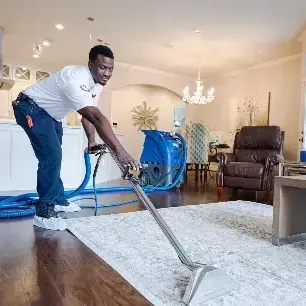
What to watch for here
- Fallen limbs and roof leaks after heavy storms
- Pipes that burst as a hard freeze thaws
- Washer, dishwasher and water heater leaks upstairs
What to do while the water is still spreading
- 1
Close the fixture valve or the main shutoff so the source stops adding water, and note where the shutoff sits for the crew.
- 2
Switch off power to wet rooms at the panel, and stay away from outlets, lamps and appliances standing in water.
- 3
Lift small items, pillows and paper off wet floors, and slide furniture legs onto foil or plastic blocks.
- 4
Photograph the damage and the source before anything moves, and keep damaged samples that an adjuster may ask to see.
- 5
Leave wet drywall, carpet and ceilings alone and let the team open them only after the meters show where the moisture went.
Knowing where the main shutoff sits before winter matters, since a pipe that splits during a hard freeze keeps pouring until someone closes the valve, and everyone in the home should know the spot.
Get the drying plan startedWater Damage Restoration Services in Monroe, GA
Each service page below covers one cause of water damage in local homes and businesses, from a burst pipe to a backed-up drain, and what the crew does next.
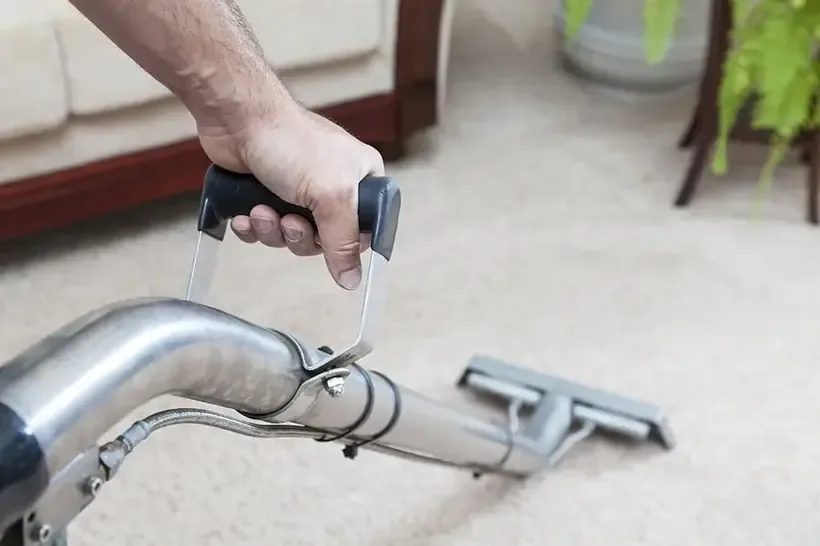 Water Extraction & RemovalTruck-mounted pumps and wands pull standing water and soaked padding out before it wicks into walls.How it gets handled
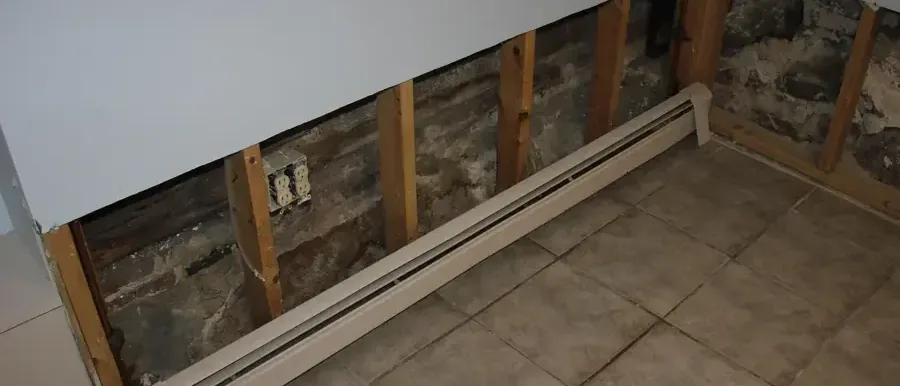
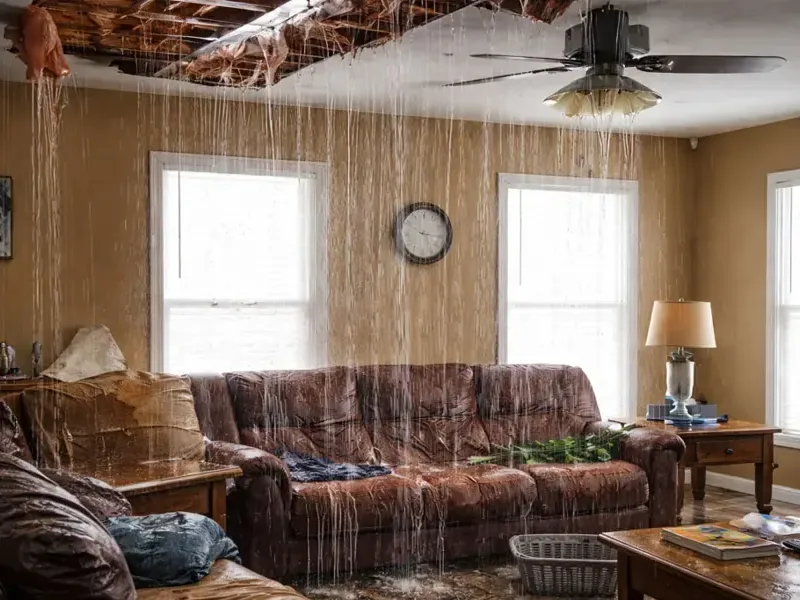 Burst Pipe CleanupFailed supply pipes mean fast extraction, opened baseboards and drying inside the wall cavities.How it gets handled
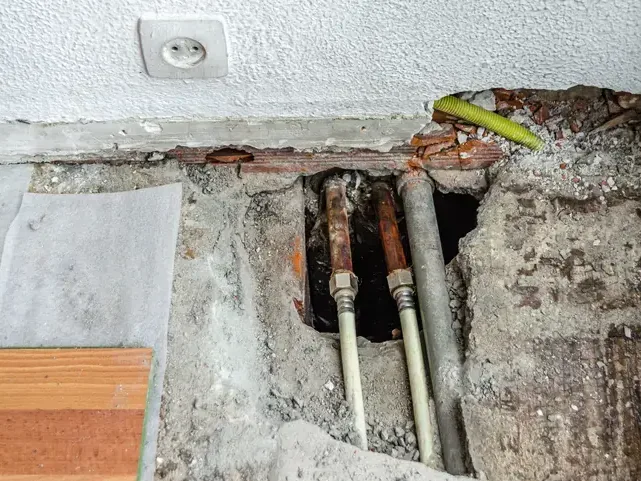 Slab Leak Water DamageLeaks under a concrete floor are traced by a plumber, then the flooring above and the slab get dried.How it gets handled
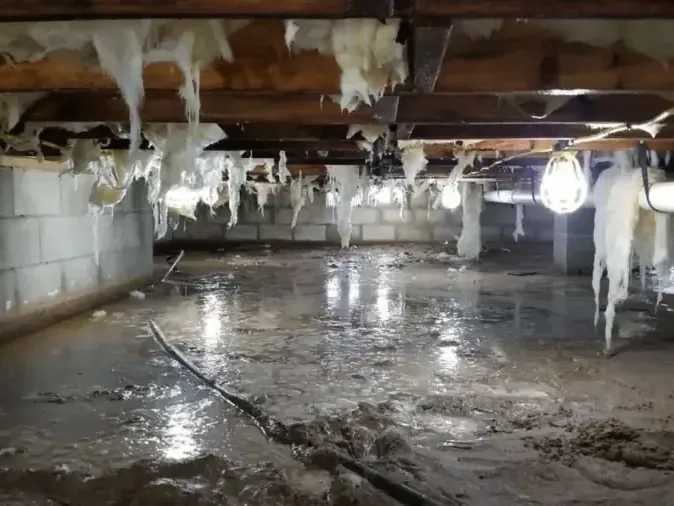 Crawl Space Water DamageWet insulation, standing water and damp joists under the floor get pumped, pulled and dried.How it gets handled
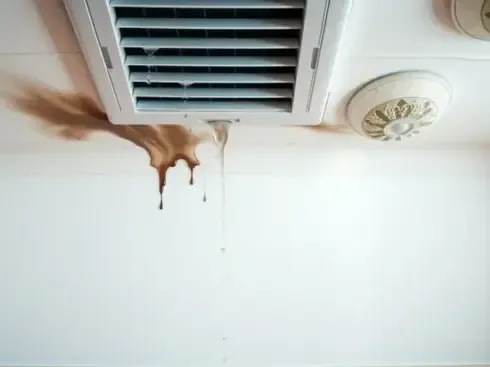 AC & Air Handler LeaksOverflowing condensate pans and clogged drains that stain ceilings or soak closet floors.How it gets handled
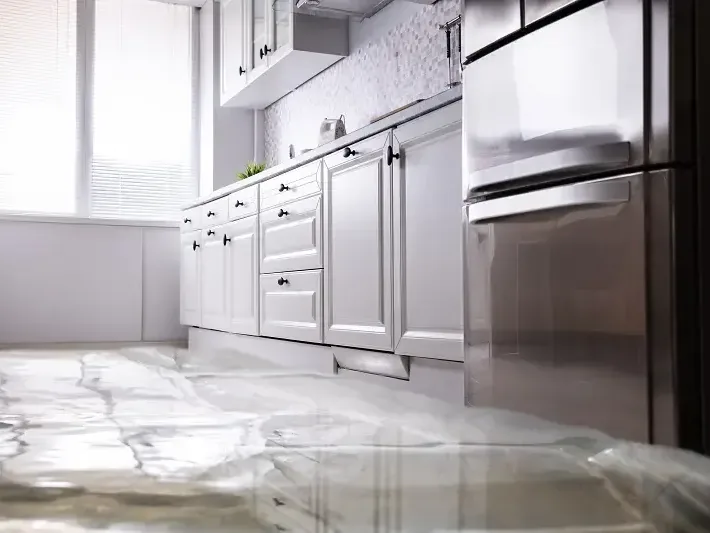 Appliance Leak CleanupWasher, dishwasher and refrigerator leaks that creep under cabinets and into the subfloor.How it gets handled
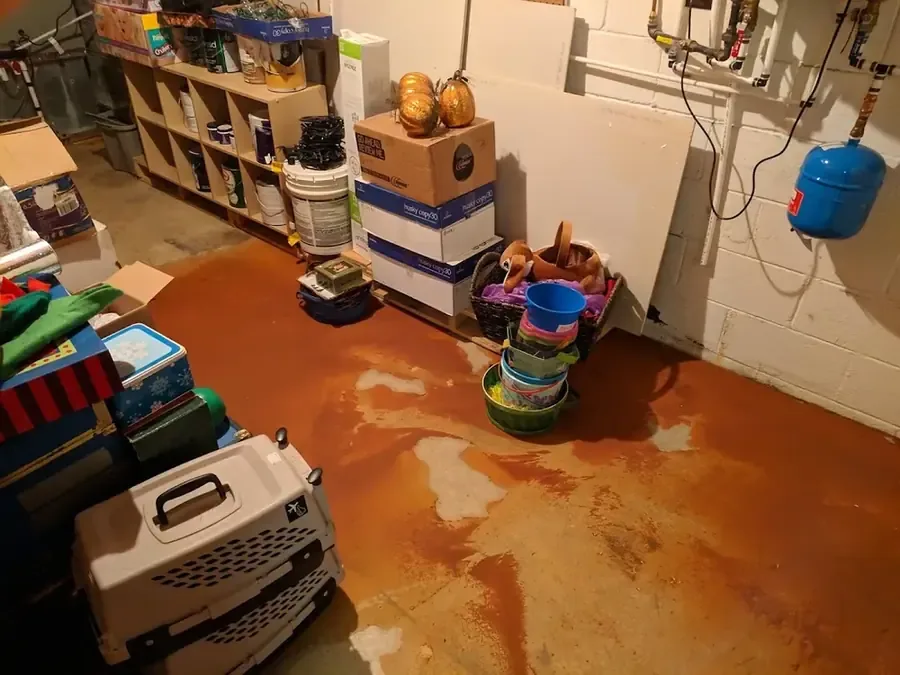 Water Heater Leak CleanupTank failures in garages, closets or attics, with the wet floor and walls dried out.How it gets handled
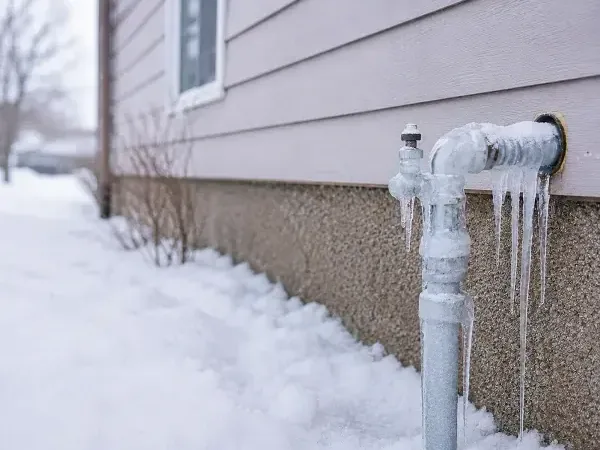 Frozen Pipe CleanupPipes that split in a hard freeze and flood the home as the ice thaws.How it gets handled
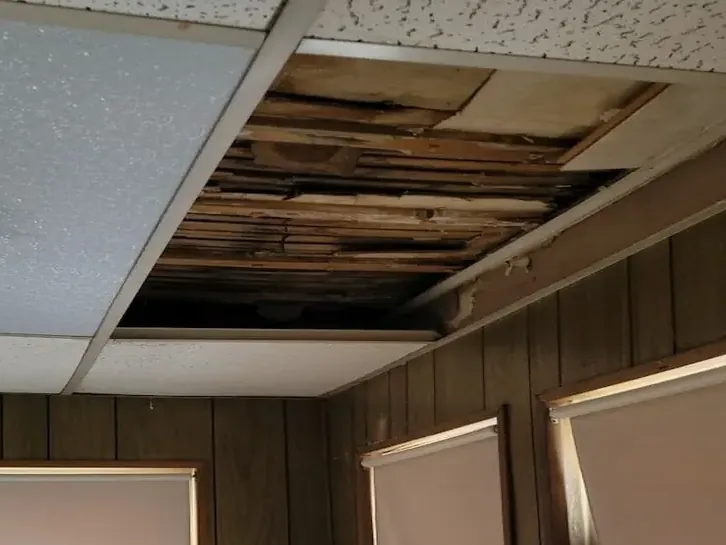 Roof Leak Water DamageWind, fallen limbs and failed flashing let rain into attics, insulation and ceilings below.How it gets handled
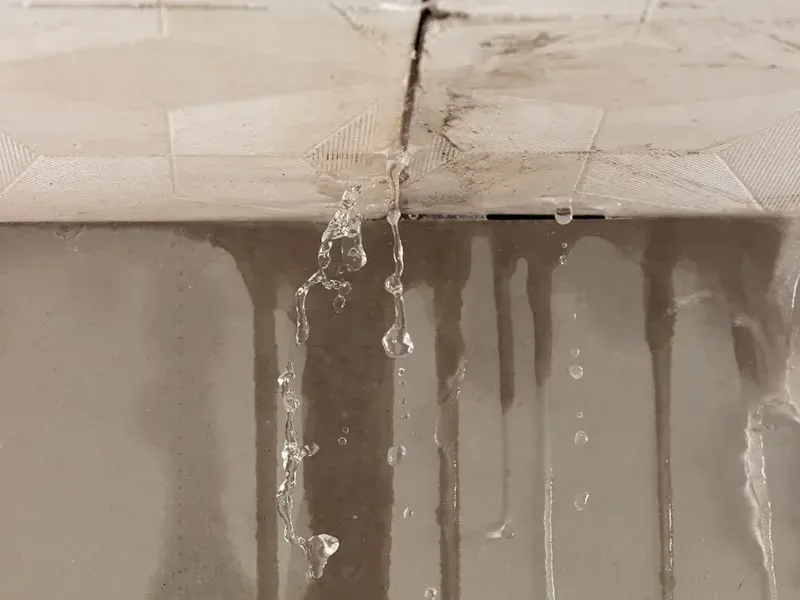 Ceiling Leak Water DamageStains, sagging drywall and drips from a leak above, opened and dried from both sides.How it gets handled
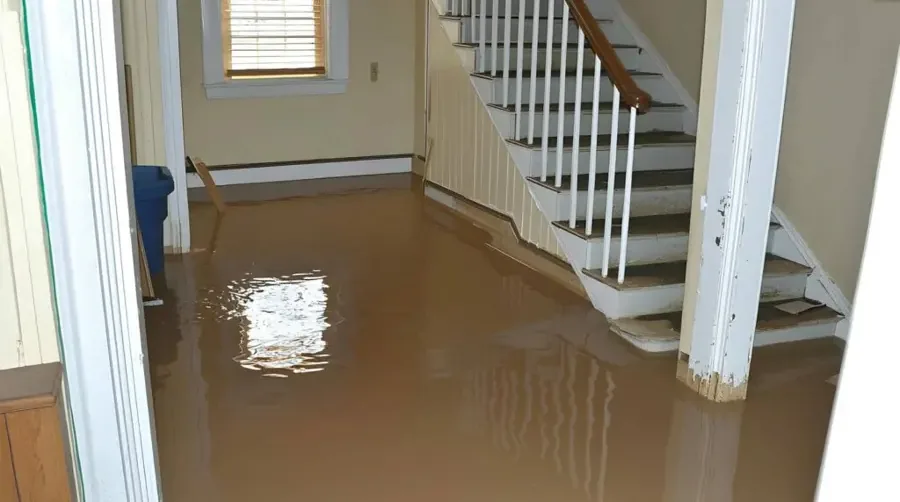
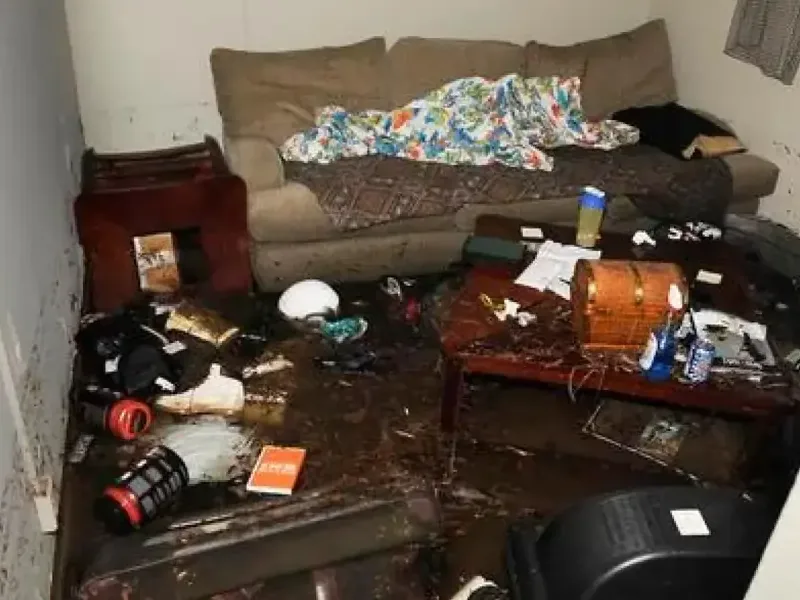 Storm & Flash Flood CleanupRunoff and flash flooding pushed into garages and low rooms, with mud removed and surfaces treated.How it gets handled
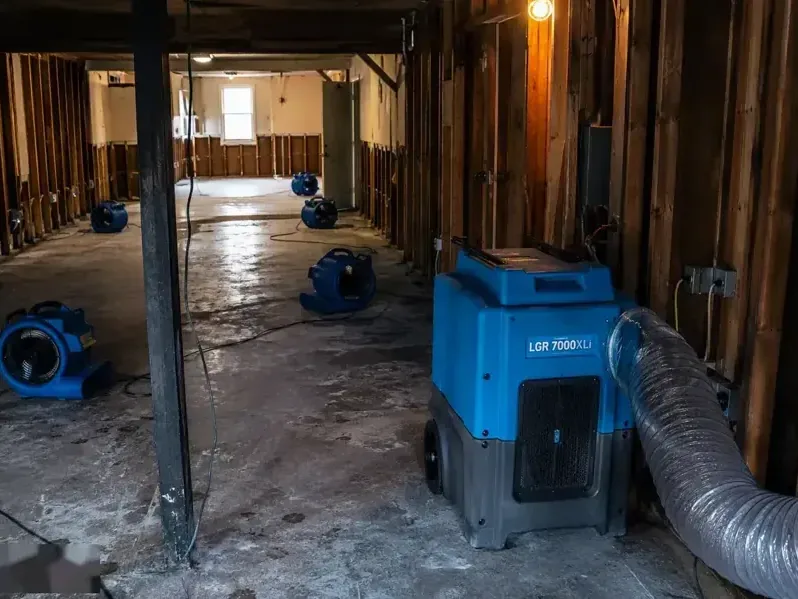 Structural Drying & DehumidificationAir movers and dehumidifiers bring framing, floors and plaster down to dry-standard readings.How it gets handled
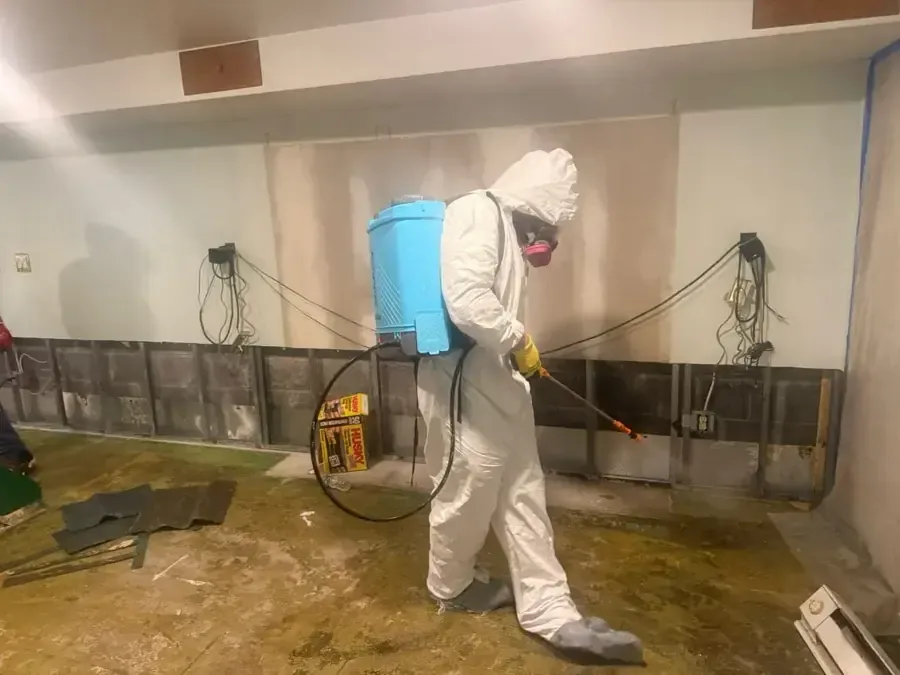 Sewage & Septic Backup CleanupDrain and sewer backups are handled as a health hazard, with gear, containment and cleaning.How it gets handled
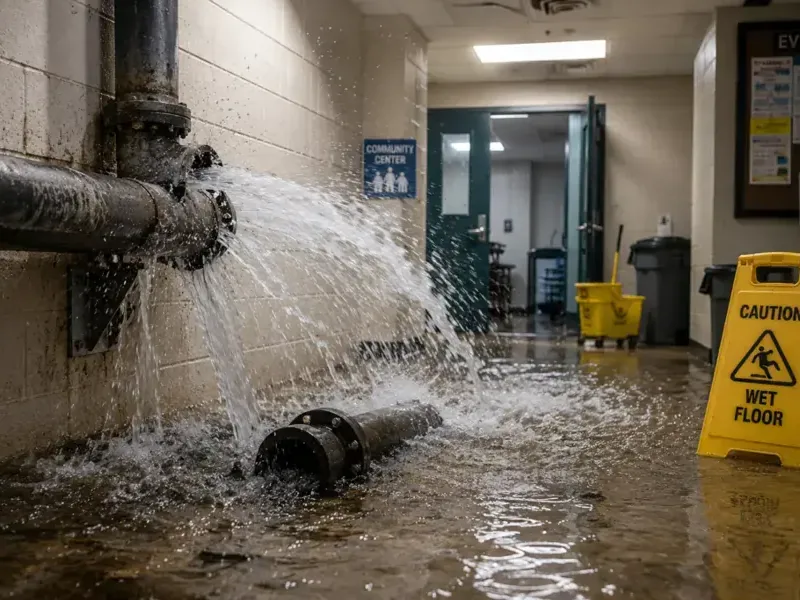 Commercial Water DamageOffices, shops and warehouses dried around business hours, with logs kept for the claim.How it gets handled
Not sure which one fits?
Describe what happened and where the water came from, and the team will point to the page and the first steps that match.
Tell the team what you seeWhat a typical drying job looks like
Every job follows the same sequence of finding the water, setting equipment, checking readings and confirming dry, adjusted to the home's materials and age.
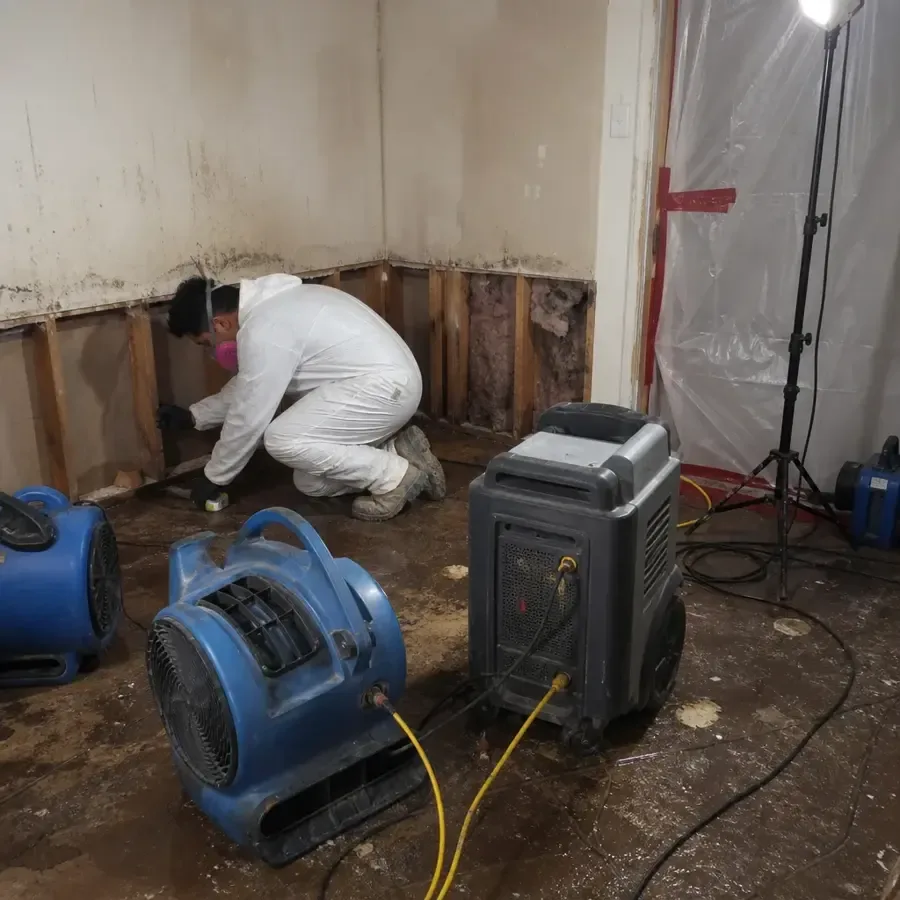
- Moisture mapped first
- Containment where needed
- Equipment sized to materials
- Readings logged every visit
- First visit
Trace the moisture
A meter and thermal camera follow the water past what is visible, so wet walls, pad and subfloor are marked before any cutting starts.
- First visit
Set the equipment
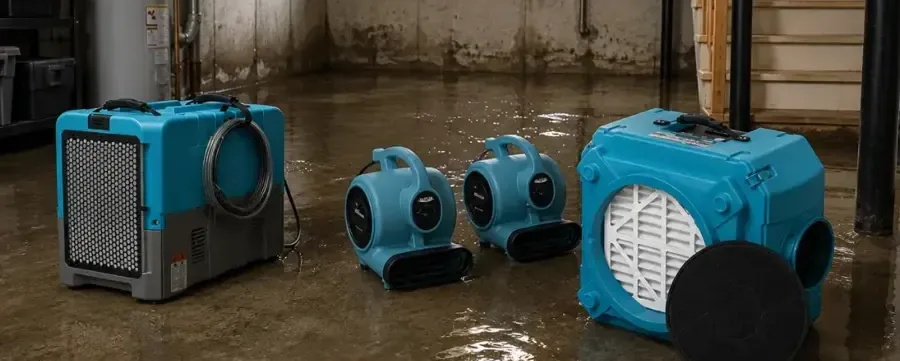
Air movers, an LGR dehumidifier and drying mats go in by room size and material, with plaster and old floors set separately.
- Middle days
Read and adjust
Daily readings show which areas are drying slowly, and the crew moves air movers or adds capacity until the numbers drop.
- Last day
Confirm it is dry
Final readings are compared to unaffected material in the same home, then equipment comes out and the log goes to the file.
Most jobs need several days of drying, and the drying time estimator shows how materials, humidity and the size of the loss change that estimate.
Monroe drying plan helpAll water damage categories covered in Monroe, GA
The category of water sets how much material has to come out, so the team identifies the source before deciding what to save.
Category 1: clean water
Supply pipe breaks and tank leaks start as clean water, but after a day or two it can pick up contamination from the materials it soaks.
Category 2: gray water
A washer or dishwasher discharge, or an overflowing sink, carries some contaminants, so carpet pad and other soft materials usually have to come out.
Category 3: black water
Sewage backups and floodwater from outside are treated as hazardous, which means containment, protective gear and removal of porous materials.
Read about sewage cleanupWhat the drying work looks like

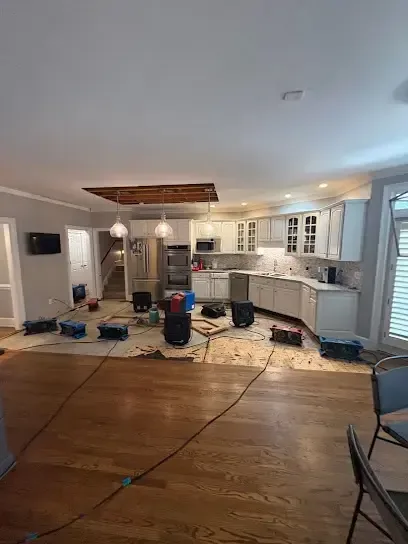
What does water damage restoration cost in Monroe, GA?
Restoration usually runs from $1,200 to $20,000+, with the number set by how many rooms are wet, how clean the water was and how long it sat before drying began. Final figures follow the on-site scope.
Single room, caught early
$1,200 to $3,500- Standing water pulled out
- Wet padding removed
- Air movers and a dehumidifier
Several rooms with wet walls
$3,500 to $8,000- Lower walls opened up
- Carpet and pad taken out
- Readings logged each day
Whole floor or Category 3 water
$8,000 to $20,000+- Containment and antimicrobial
- Porous materials removed
- Drying that runs for days
Use the water damage cost calculator to narrow the range by room count, water type and flooring.
One call reaches Monroe water damage pros, 24/7
Dispatch covers the city and the rest of Walton County, from the historic downtown around the Walton County Courthouse to newer communities such as River Pointe and Belle Woode Estates, across ZIPs 30655 and 30656.
ZIPs 30655, 30656Downtown and the mills
Neighborhoods
Corridors
What shapes water damage around town
Monroe mixes brick mill buildings, nine historic districts and homes from nearly every decade, so the materials behind the walls vary and each drying plan has to be built for the building in front of the crew.
Hard freezes catch pipes.
In the December 2022 cold snap, many Walton County residents first lost water to frozen pipes, then had too much of it once the pipes burst and thawed. Insulation and shutoff knowledge pay off.
Storm limbs and wind.
Remnants of Hurricane Helene in September 2024 brought trees down across power wires and cut power in parts of the city, and falling limbs are a common cause of roof and ceiling leaks.
Older homes and shared walls.
About 55 percent of homes here were built before 1980, and 16.4 percent of units sit in two-unit buildings, so a leak in one home can end up in a neighbor's ceiling.
Creeks, ponds and heavy rain.
The city keeps 102 detention and retention ponds to hold stormwater, and Piedmont red clay soil absorbs rain slowly, so a hard downpour can still send runoff toward low garages and rooms.
Municipal water and sewer.
Water comes from the Alcovy River and John T. Briscoe Reservoir through the city's treatment plant, and sewage flows to the Jack's Creek Wastewater Treatment Plant, so a backup on the municipal side is a utility matter as well as a cleanup job.
Questions homeowners ask first
How quickly does water damage get worse?
Moisture moves into drywall, padding and framing quickly, and mold can begin within 24 to 48 hours, so extraction and drying should start as soon as the source is stopped. Delay turns a small repair into a larger one.
Will homeowners insurance cover the cleanup?
It depends on the policy and the cause. Sudden failures such as a burst pipe may be covered, slow seepage often is not, and the insurer's own wording decides, so read it before scoping the work.
Should the water be shut off right away?
Yes. Closing the fixture valve or the main shutoff stops new water, and the breaker for wet rooms should be off before anyone steps into standing water. For a leaking water heater, the gas or power to the tank goes off as well.
Can wet carpet and drywall be saved?
Carpet and drywall wet with clean water are often dried in place when work begins quickly, but anything that soaked in sewage or sat for days is usually removed and replaced. Meter readings, not appearance, make the call.
How long does structural drying take?
Most jobs run several days, and the readings decide the last one. Dense materials such as hardwood, plaster and concrete take longer than carpet or drywall, so the schedule is set after the first visit.
Do historic buildings dry differently?
They can. Monroe has nine historic districts and brick mill buildings, and plaster, old pine and layered floors release moisture slowly, so drying is paced and checked more often. A rushed job can crack or cup them.
What happens when pipes freeze and burst?
A split pipe keeps pouring until the supply is closed, then extraction and cavity drying begin. During the December 2022 cold snap, Walton County Emergency Management opened a warming center at Felker Park while pipe breaks were reported across the county.
Is a sewage backup different from other water?
Yes. Sewage is treated as a health hazard whatever the cause: the area is contained, porous materials are removed and surfaces are cleaned and treated before drying finishes. The sewage and septic backup cleanup service covers the full process.
Can a business stay open during drying?
Often, in part. Work is planned around opening hours, equipment is placed to keep aisles clear, and the sprinkler release at the Monroe Pavilion in December 2022 shows how fast water spreads along a row of storefronts.
What records come with the job?
Photos, moisture readings, equipment counts and daily notes are kept from the first visit, and the drying team can hand them to the adjuster or the property manager on request. Landlords and tenants each get the same set.
Call for a drying crew and stop the damage from spreading in Monroe
Describe the loss to the response team and the first steps are set around what the water touched, whether that is one room or a whole floor.