Appliance Leak Cleanup in Winder, GA
Washer hoses, dishwasher seals and ice maker tubes leak under cabinets and flooring where nobody looks. The restoration team extracts the water, opens cabinet toe kicks and dries the floor and walls behind the appliance.
(888) 532-4616Washer hose or dishwasher burst? Call- Cabinets and toe kicks opened
- Under-floor readings
- Water category noted for the claim
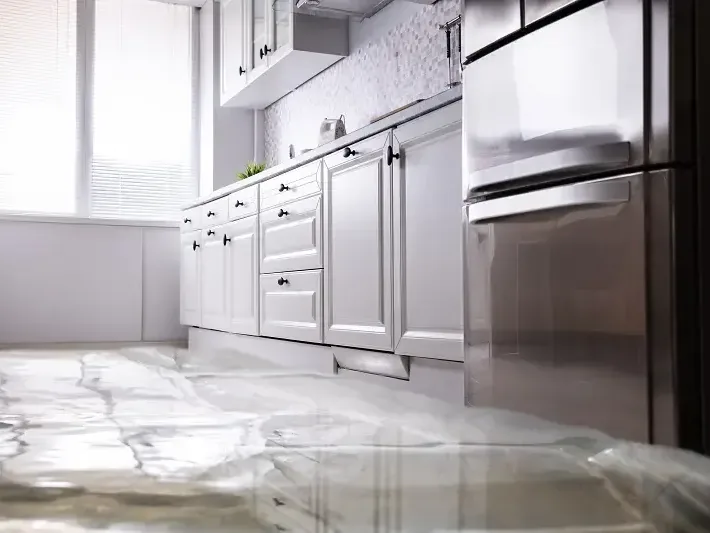
First steps for appliance leak cleanup
- 1Close the appliance valve. Washers, dishwashers and refrigerators each have a shutoff behind or under them. Use the main if it will not turn.
- 2Unplug the appliance. Pull the plug only if the outlet and the floor around it are dry.
- 3Open the drawers and toe kick. Let air reach the wet cabinet base, and photograph what you see.
- 4Keep the failed part. A burst washer hose or a cracked tube helps the plumber and the adjuster.
How appliance leak cleanup gets handled here
Two dry-outs can look the same on the first afternoon. The readings, the order of the work and the paper trail are what set a complete one apart.
Rapid local response
Dispatch runs 24/7, since a supply hose that bursts can release hundreds of gallons in a few hours.
Dried to the IICRC S500 standard
Washer rinse water and dishwasher water are often Category 2, which changes what can be dried in place.
Claim-ready documentation
The crew photographs the failed hose or seal and the wet cabinets before anything is removed.
Kitchen and laundry know-how
Cabinet bases, vinyl plank and the subfloor under a laundry room each hold water differently.
What does appliance leak cleanup cost in Winder, GA?
Appliance leak cleanup typically runs $1,000 to $5,000, depending on how long the leak ran, whether it reached cabinets or the subfloor and whether the water was clean or gray.
Four things move the number: the water category, how many square feet got wet, the material class and how soon drying began. The water damage cost calculator gives a planning range, and the firm figure comes after the walkthrough.
Caught early, one room
$1,000 to $2,500- Extraction
- Toe kicks opened
- Floor and wall drying
Cabinets and subfloor
$2,500 to $5,000- Cabinet bases dried or removed
- Plank flooring lifted
- Subfloor readings
Ran for days or upstairs
$5,000 to $10,000+- Ceiling below opened
- Several rooms dried
- Extended monitoring
From first reading to dry: appliance leak cleanup
- 1
Trace the water
The tech maps where the water ran under the cabinets, flooring and walls.
- 2
Extract
Water comes off the floor and out of the pad, plank seams and cabinet bases.
- 3
Open what traps water
Toe kicks come off, and plank flooring is lifted where water sits under it.
- 4
Dry and confirm
Air movers and dehumidifiers run until the subfloor and cabinet bases read dry.
Most kitchen and laundry leaks start small and hidden: a dishwasher door seal, an ice maker tube behind the refrigerator, a washer hose that bulges and splits. In newer Winder homes with vinyl plank floors, the water slides under the planks and across the room before anyone sees it.
Appliances behind the most water damage
- Washing machine supply hoses, especially rubber ones more than five years old
- Dishwasher door seals, drain hoses and supply connections
- Refrigerator ice maker and water dispenser tubes
- Water softeners and filtration systems
- Upstairs laundry rooms that leak into the ceiling below
How appliance leak cleanup is done
The restoration team pulls the appliance out, extracts the water and maps how far it ran. Cabinet toe kicks come off so air can reach the base, and vinyl plank or laminate is lifted where water sits under it. Washer and dishwasher water is often Category 2, so wet pad comes out and surfaces get cleaned before structural drying begins. Upstairs laundry leaks follow the same steps as a ceiling leak.
Water under the dishwasher or behind the washer? Get it out of the cabinets and floor.
Call (888) 532-4616 about appliance leak cleanupKeeping it from happening again
Braided stainless washer hoses, a leak sensor under the dishwasher and a drain pan under an upstairs washer all cut the risk. The EPA WaterSense leak checklist walks through appliance leak checks, and the U.S. Consumer Product Safety Commission lists appliance recalls.
Covering Winder, GA 30680 and Barrow County
The restoration team covers all of ZIP 30680, from the older streets around the courthouse downtown to the Fort Yargo side and the GA 316 corridor, with Statham, Bethlehem, Auburn and Braselton close by.
View the full service areaAppliance Leak Cleanup: what homeowners ask
Is water from a washing machine clean?
Water from a burst supply hose is clean, Category 1. Drain or rinse water from the washer or dishwasher is usually Category 2, so carpet pad and other porous materials it soaked come out.
Will the kitchen cabinets have to come out?
Often not. Opening the toe kicks and drying the cabinet bases saves many cabinets. Particleboard bases that swelled usually have to be replaced.
How long does a washer hose last?
Many plumbers suggest replacing rubber washer hoses about every five years. Braided stainless hoses last longer and are less likely to burst.
Does insurance cover a dishwasher leak?
A sudden leak is often covered, while a slow drip that went on for weeks often is not. Coverage depends on your policy, so check with your own insurer.
Can the vinyl plank floor be saved?
Sometimes. Click-together plank can be lifted, dried under and reinstalled if it did not swell. Glued plank and swollen laminate usually get replaced.
How long does drying take after an appliance leak?
Most appliance leaks dry in two to four days. Leaks that reached the subfloor or ran under cabinets for days take longer.
Appliance leak under the cabinets? Dry it before it swells.
Water under cabinets and plank flooring keeps spreading out of sight. The restoration crew dispatches around the clock.