Crawl Space Water Damage in Monroe, GA
Water under a house stays out of sight, so damp insulation, a sagging vapor barrier or a musty smell may be the first sign, and the crew checks the joists and subfloor before deciding what has to dry.
(888) 532-4616Describe the damp crawl space- Pump-out of standing water
- Joists and subfloor dried
- Vapor barrier replaced
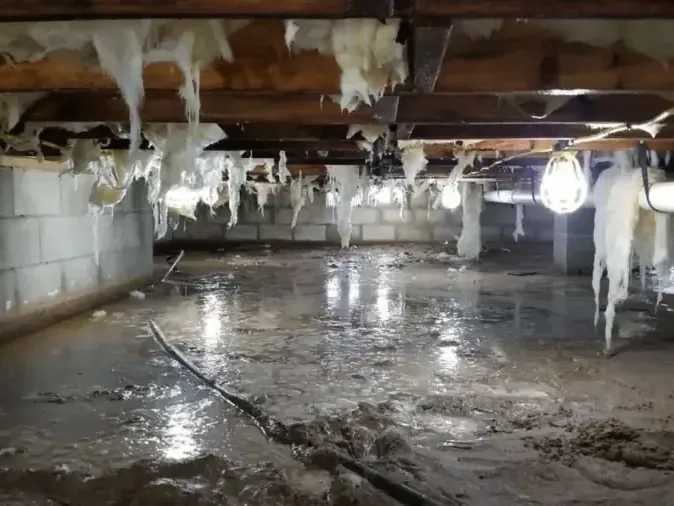
First steps for crawl space water cleanup
- 1Find the water. The crew enters the space, finds where water is coming from and checks pooling, wet insulation and the vapor barrier.
- 2Pump it out. A small pump or extraction unit removes standing water, and sloped spots are checked for hidden pockets.
- 3Strip what holds water. Wet batt insulation and torn vapor barrier are pulled out, because they trap moisture against the framing.
- 4Dry and ventilate. Air movers and a dehumidifier run in the space while joist and subfloor readings are logged until they settle.
How crawl space water cleanup gets handled here
Two dry-outs can look the same on the first afternoon. The readings, the order of the work and the paper trail are what set a complete one apart.
Around-the-clock dispatch
Rain and plumbing failures do not keep office hours, so dispatch for the drying crew runs day and night.
IICRC S500 drying standard
Wood framing is dried toward target readings set by S500 practice, and the numbers are checked every visit before equipment leaves.
Claim-ready records
Photos of the space, a moisture log for each joist bay and notes on the source help an adjuster follow the work.
Local housing know-how
Houses in town date from before 1940 to brand new builds, and no two crawl spaces match, so each is inspected on its own instead of assumed.
What does crawl space water cleanup cost in Monroe, GA?
Crawl space work runs $1,500 to $3,000 when the space is damp without standing water, and $6,000 to $12,000+ when sewage or long-term water is involved. Readings set the final scope.
Four things move the number: the water category, how many square feet got wet, the material class and how soon drying began. The water damage cost calculator gives a planning range, and the firm figure comes after the walkthrough.
Damp, no standing water
$1,500 to $3,000- Wet batts pulled
- Dehumidifier in the space
- Framing readings taken
Standing water after rain or a leak
$3,000 to $6,000- Water pumped out
- Vapor barrier replaced
- Joists and subfloor dried
Sewage or long-term water
$6,000 to $12,000+- Category 3 cleaning
- Framing treated
- Extended drying
From first reading to dry: crawl space water cleanup
- 1
Inspect the space
The tech looks at pooling, wet insulation, framing and the vapor barrier, and notes where the water is entering.
- 2
Pump and clear
Standing water is removed and soaked insulation is bagged and carried out of the space.
- 3
Dry the framing
Equipment runs in the space with readings taken on the joists and the subfloor on every visit.
- 4
Seal and verify
A new vapor barrier goes down only once the framing readings are back in the dry range.
A crawl space collects whatever water the house sheds: rain that runs under the foundation, a drip from a supply pipe or a drain, even humid air that condenses on cool surfaces. The crew starts by working out which of those is feeding it.
What gets done under the floor
- Standing water pumped or extracted
- Wet batt insulation bagged and removed
- Torn or soaked vapor barrier replaced
- Joists and subfloor metered bay by bay
- Air movers and a dehumidifier set in the space
- Photos taken before and after the work
Why red clay and older floors matter
Georgia Piedmont red clay drains slowly, so water that reaches a crawl space can sit for a long time. About 55 percent of homes here were built before 1980, and older floors often add layers that hide damp. Foundation details are not documented for the whole town, which is why the crew inspects each space rather than assuming what is under a house.
Water or a musty smell under the floor? Tell the response team what the space looks like.
Talk to dispatch about crawl space water cleanup: (888) 532-4616What happens if it stays wet
Damp framing under a house can stay wet for weeks, and mold can begin within 24 to 48 hours of the first soak. Wet insulation also pulls moisture up into the subfloor above, so the structural drying plan and the storm and flash flood cleanup steps apply when rain is the source. Drying stops when readings match a dry reference.
Covering Monroe, GA and the roads around it
Dispatch covers the city and the rest of Walton County, from the historic downtown around the Walton County Courthouse to newer communities such as River Pointe and Belle Woode Estates, across ZIPs 30655 and 30656.
View the full service areaCrawl Space Water Damage: what homeowners ask
Can a crawl space be dried without removing insulation?
Rarely. Wet batts hold water against the subfloor and joists, so they are normally removed, and replacement goes in only after the framing reads dry on the meter.
What causes water under a house?
Common sources are rain runoff, a leaking supply pipe or drain, an air conditioner condensate drain and humid air condensing on cool surfaces, and each one calls for a different fix.
Does a damp crawl space affect the rooms above?
Yes. Moisture rises into the subfloor and flooring, and it can raise humidity indoors, so floors above are often metered along with the space below.
Is sewage in a crawl space different?
Yes. A sewage release is Category 3 water, so the space is contained, porous materials are removed and framing is cleaned and treated, as covered under sewage and septic backup cleanup.
How long does a crawl space take to dry?
Several days is common, and the framing readings decide the last day. The drying time estimator gives a rough starting range for planning around the work.
Should a homeowner go under the house to look?
Only with care. Standing water near wiring or a sewage smell is a reason to stay out and let the trained crew check the space first, with the right gear and a plan.
Water under the house? Get the crawl space checked in Monroe
Tell the drying team what the space looks like and the pump-out and drying plan starts from that.