Crawl Space Water Damage in Auburn, GA
Water under a house hides from view while it soaks insulation, joists and the subfloor above. The drying team pumps the space out, removes what is wet, checks the framing with a meter and dries the crawl space to a safe moisture level.
(888) 532-4616Get the crawl space pumped and dried- Joist and subfloor readings
- Standing water pumped out
- Vapor barrier repaired
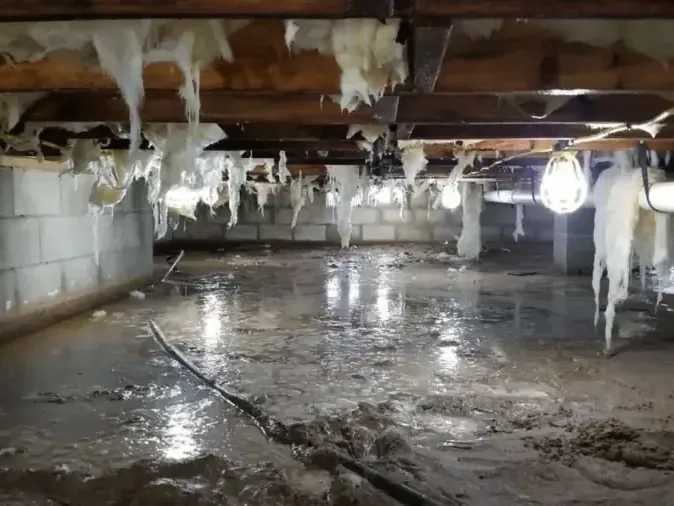
First steps for crawl space water cleanup
- 1Look before entering. The tech who does the walkthrough checks the access panel for standing water, sagging insulation and any sewage smell.
- 2Pump it down. The extraction crew sets submersible pumps and moves the water out and away from the house, then clears low pockets.
- 3Strip the wet material. Soaked insulation, a torn vapor barrier and stained scraps come out and are bagged for disposal.
- 4Dry the framing. A dehumidifier and fans run under the floor while meter readings track the joists and subfloor.
How crawl space water cleanup gets handled here
Two dry-outs can look the same on the first afternoon. The readings, the order of the work and the paper trail are what set a complete one apart.
Dispatch all day and night
Storms and leaks do not wait for business hours. The response team works nights, weekends and holidays, because standing water keeps wicking upward.
S500 drying standard
Wood framing is dried to a measured goal under the IICRC S500 standard, so the readings, not guesswork, decide when equipment leaves.
Claim-ready documentation
Photos of the water depth, the wet insulation and the framing readings are saved for each visit, giving an adjuster a clear before and after.
Soil and drainage know-how
Red clay soil drains slowly, and Auburn sits near the upstream end of the Upper Oconee River watershed, so after heavy rain a low yard can send water toward the house.
What does crawl space water cleanup cost in Auburn, GA?
Crawl space work runs $1,500 to $3,000 when only damp. Pumping after a storm or leak reaches $3,000 to $6,000, and sewage or long-term water reaches $6,000 to $12,000+.
Four things move the number: the water category, how many square feet got wet, the material class and how soon drying began. The water damage cost calculator gives a planning range, and the firm figure comes after the walkthrough.
Damp, no standing water
$1,500 to $3,000- Wet insulation pulled out
- Dehumidifier set up
- Framing moisture readings
Standing water after rain
$3,000 to $6,000- Pumps and wet vacuum
- New vapor barrier laid
- Joists and floor dried
Sewage or long-term water
$6,000 to $12,000+- Category 3 cleaning
- Antimicrobial on framing
- Drying runs longer
From first reading to dry: crawl space water cleanup
- 1
Test the space
Moisture is measured in joists, the subfloor and the soil surface to see how far the water has reached.
- 2
Remove standing water
Pumps run until the surface is clear, then a wet vacuum clears the low pockets.
- 3
Replace what failed
Wet insulation is pulled and a torn vapor barrier is replaced so ground moisture stays below the floor.
- 4
Dry and verify
Equipment runs until the wood meets the dry goal, then a final reading and photos close the file.
A crawl space is the one part of a house nobody looks at until the floor feels soft. When water gets in, it soaks insulation, raises humidity and starts working on the wood above. The crawl space moisture check helps sort a damp space from a wet one.
Signs the space under the house is wet
- Floors that feel cold, springy or slightly soft
- Musty odor rising through the vents and registers
- Insulation sagging or lying on the ground
- Standing water or a dark tide mark on the piers
- Condensation on ducts or the underside of the floor
- Doors and cabinets that start sticking
Where the water comes from
Red clay soil is slow to absorb rain, so after a heavy storm water can sit against a foundation and look for a way in. The Apalachee River runs to the south and creeks cut through lower ground, which keeps drainage on the minds of local homeowners. Leaking supply pipes and failed drain connections add water from inside. The drying team identifies the source before pumping, because water that keeps coming in cannot be dried out.
Water under the house right now? Talk with a technician about pumping and drying.
Talk to dispatch about crawl space water cleanup: (888) 532-4616Drying the wood and the air
Joists and subfloor are checked with a moisture meter, and a dehumidifier does the heavy work because summer air outdoors carries too much humidity to help. Wood that stays above its dry goal for days risks rot and mold, so equipment stays until readings level out. When sewage is involved, the job changes to Category 3 cleanup with containment and antimicrobial treatment.
Covering Auburn, GA and the roads around it
The restoration team covers all of ZIP 30011, from the downtown storefronts and the historic district to the Town Center, Harmony and Trinity Station, plus the homes and businesses along Atlanta Highway and Mount Moriah Road.
View the full service areaCrawl Space Water Damage: what homeowners ask
How can I tell the crawl space is wet?
Look for standing water, sagging insulation and a musty smell near the floor vents. A moisture meter on the joists gives a clear answer when the space is only damp.
Can a crawl space dry without pumping?
Only when there is no standing water. Damp insulation and humid air respond to a dehumidifier, but any pooled water has to be pumped out before drying can start.
Does wet insulation have to be replaced?
Almost always. Fiberglass that has been soaked loses its shape, holds moisture against the subfloor and stays damp for weeks. It is removed and replaced after the framing dries.
What if the water in the crawl space is sewage?
That is Category 3 water, so the space needs containment, protective gear and antimicrobial treatment. See sewage backup cleanup for the steps.
Is a vapor barrier part of the repair?
A torn or missing vapor barrier lets ground moisture rise year round, so it is replaced once the space is dry. It slows the next round of humidity from reaching the wood.
How long does a crawl space take to dry?
Expect several days of equipment time, longer when joists are thick or the space stayed wet for weeks. Readings, not a calendar, decide when the dehumidifier comes out.
Water under your floor? Get the crawl space pumped out
Share what you can see from the access panel, and the drying team will plan pumps and dehumidifiers around it.