Structural Drying in Auburn, GA
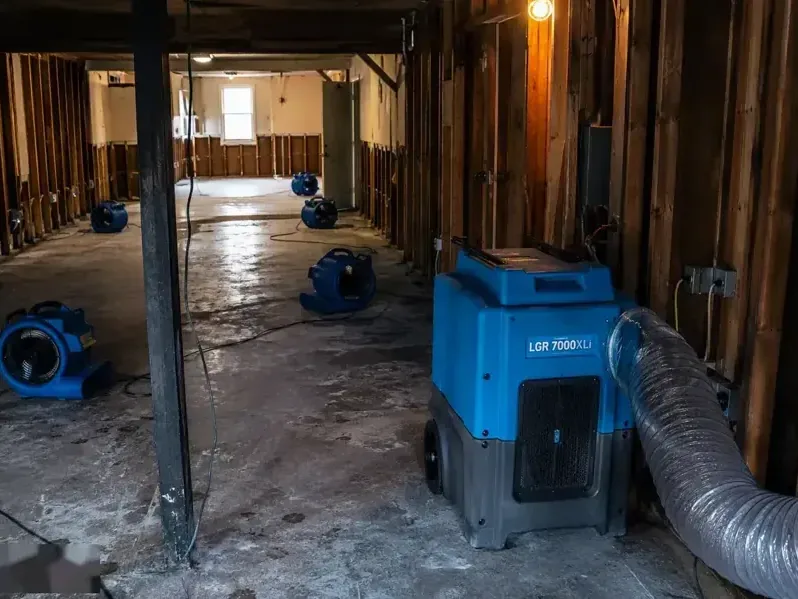
Pulling water out is only half of the recovery. The drying team places air movers and dehumidifiers by room volume and wet material, checks readings every visit and adjusts the setup until the building meets its dry goal.
(888) 532-4616Plan the dry-out with readings- LGR dehumidifiers deployed
- Readings logged daily
- Equipment adjusted by data
First steps for structural drying
- 1Map the moisture. A meter and a thermal camera mark every wet surface so equipment goes where the water actually is.
- 2Size the equipment. The drying team calculates air mover and dehumidifier capacity from the room volume and the materials involved.
- 3Check and shift. Each visit brings new readings, and equipment is moved or removed as materials reach their dry goals.
- 4Document the finish. Final readings, photos and psychrometric logs confirm that the structure is dry.
How structural drying gets handled here
Two dry-outs can look the same on the first afternoon. The readings, the order of the work and the paper trail are what set a complete one apart.
Night and weekend setup
Water does not stop at closing time, and neither does the response team. Equipment can be set during evening or weekend visits.
IICRC S500 drying standard
The S500 standard sets the method: control the humidity, move air across wet surfaces and measure until the dry goal is met. The crew follows it and keeps the paperwork.
Claim-ready documentation
Daily psychrometric logs, equipment counts and photos show an adjuster what ran, for how long and why.
Housing mix here
About one third of homes date to the 1990s and one third to the 1980s, with a newer wave of townhomes since, so framing, flooring and finishes vary and no single setup fits every job.
What does structural drying cost in Auburn, GA?
Structural drying runs $1,200 to $2,500 for one or two rooms. Several rooms or hardwood run $2,500 to $5,000, and Class 4 jobs with dense materials reach $5,000 to $10,000+.
Four things move the number: the water category, how many square feet got wet, the material class and how soon drying began. The water damage cost calculator gives a planning range, and the firm figure comes after the walkthrough.
One or two rooms
$1,200 to $2,500- Fans and an LGR unit
- Readings every visit
- Usually three or four days
Several rooms or hardwood
$2,500 to $5,000- Mats for wood floors
- Added dehumidifier capacity
- Humidity and heat logs
Class 4, dense materials
$5,000 to $10,000+- Desiccant dehumidifiers
- Concrete and plaster dried
- Monitoring runs longer
From first reading to dry: structural drying
- 1
Establish the goal
Readings from unaffected rooms set the dry standard for each material.
- 2
Place the equipment
Air movers and dehumidifiers go in so air crosses every wet surface.
- 3
Monitor and adjust
Temperature, humidity and moisture readings are logged each visit and the setup changes with them.
- 4
Pull the equipment
When each material matches its goal, the gear comes out and the file is closed.
Drying is a science of moving air and pulling humidity, not just running fans. Water trapped in framing, subfloor and plaster leaves slowly, and surface dryness can be misleading. The drying team follows water extraction with equipment sized to the room, then lets measurements, not a clock, decide the finish.
What the drying equipment does
- Air movers push dry air across wet floors and walls
- LGR dehumidifiers pull moisture out of the air
- Desiccant units handle cold or very dense materials
- Drying mats draw water from hardwood floors
- Wall cavity drying pushes air through drilled holes
- Thermal cameras show wet spots behind the surface
Why homes of different eras dry differently
About one third of local homes were built in the 1990s and one third in the 1980s, and the median year is 1990. Many of those houses have had paint, patching and remodeling since, and newer townhome communities add their own layouts. Drywall, subfloor and framing hold water differently, and each material gets its own dry goal. Where hardwood or tile is involved, the drying team slows the process to avoid cupping or cracking.
Walls or floors still wet after the water is gone? Talk with a technician about drying.
Talk to dispatch about structural drying: (888) 532-4616How the dry goal gets proven
Moisture readings from unaffected rooms set the target. Each visit adds temperature, humidity and material readings, and the drying team shifts equipment toward whatever is still wet. The drying time estimator gives a rough range before the first visit, and the logs give the final answer for the adjuster.
Covering Auburn, GA and the roads around it
The restoration team covers all of ZIP 30011, from the downtown storefronts and the historic district to the Town Center, Harmony and Trinity Station, plus the homes and businesses along Atlanta Highway and Mount Moriah Road.
View the full service areaStructural Drying and Dehumidification: what homeowners ask
How long does structural drying take?
Most jobs take three to five days. Hardwood, plaster and concrete can need longer, and the drying team leaves equipment in place until readings meet the goal.
Why are fans and a dehumidifier both needed?
Fans move air across wet surfaces and lift moisture from materials. The dehumidifier pulls that moisture out of the air, so the water leaves the building instead of just moving around.
Will drying equipment raise my electric bill?
It adds to usage while it runs, and the drying team lists equipment and run times so a claim can include it. Electricity here comes from Georgia Power.
Can floors and walls be dried without removing them?
Often yes when the water is clean and caught early. Drying mats, drilled wall cavities and cut baseboards let air reach wet layers, while heavily soaked porous materials are removed.
How do you know when drying is finished?
Moisture readings in each material match the dry reference from unaffected rooms. The logs, photos and final readings go in the file as proof.
What is Class 4 drying?
It covers dense materials such as hardwood, plaster and concrete that release moisture slowly. Desiccant dehumidifiers and extended monitoring usually come into play.
Everything extracted? Get the structure dried properly
Describe what was wet and for how long, and the drying team will size the equipment before the first visit.