Structural Drying and Dehumidification in Dacula, GA
Pumping removes the water you can see, but framing, subfloor and drywall hold moisture you cannot. The drying crew places air movers and dehumidifiers by the numbers and keeps reading until every wet material is dry.
(888) 532-4616Ask how drying is measured- Daily psychrometric readings
- LGR dehumidifiers
- Air movers placed by data
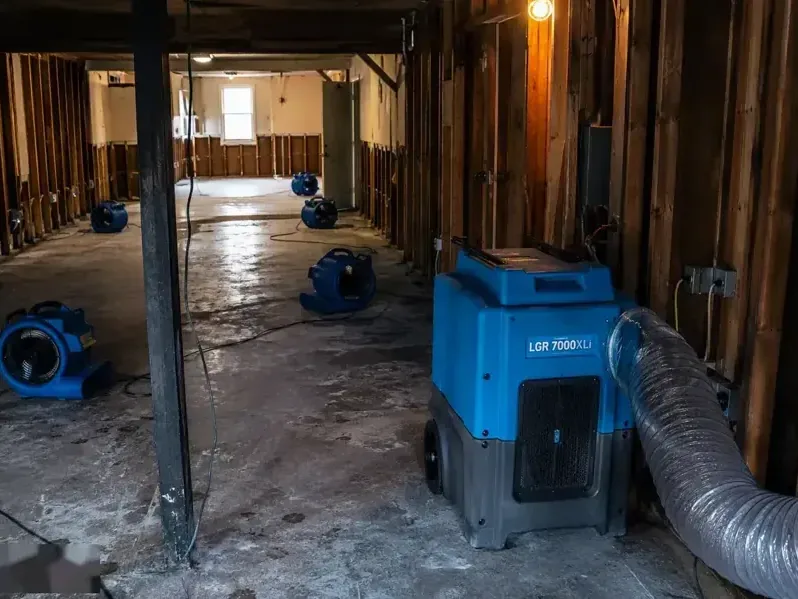
First steps for structural drying
- 1Pick the right goal. Drying targets come from readings in dry areas of the same home, so the crew samples unaffected walls first.
- 2Map the wet zone. Meters and a thermal camera outline the wet materials so equipment goes where moisture really sits.
- 3Balance the air. Air movers push moisture off surfaces while dehumidifiers pull it out of the air, and neither works well alone.
- 4Read it daily. Each visit records temperature, humidity and moisture content, and equipment moves when the numbers change.
How structural drying gets handled here
Two dry-outs can look the same on the first afternoon. The readings, the order of the work and the paper trail are what set a complete one apart.
Around-the-clock dispatch
Drying equipment can be set at any hour, and the crew is available nights and weekends once the water is out.
IICRC S500 drying standard
S500 sets the method: classify the loss, choose equipment, measure daily and stop only when materials reach the dry standard.
Claim ready documentation
Drying logs list the equipment used, the readings each day and the date it came out, which an adjuster can follow entry by entry.
Modern framing know-how
With a median home build year of 1998, most local drying work is on modern framing and drywall, and wet framing should be dried before mold starts.
What does structural drying cost in Dacula, GA?
One or two rooms of drying cost $1,200 to $2,500, several rooms or hardwood run $2,500 to $5,000, and Class 4 jobs in dense materials can pass $10,000.
Four things move the number: the water category, how many square feet got wet, the material class and how soon drying began. The water damage cost calculator gives a planning range, and the firm figure comes after the walkthrough.
One or two rooms
$1,200 to $2,500- Air movers and one LGR unit
- Readings every visit
- Three to four days
Several rooms or hardwood
$2,500 to $5,000- Hardwood drying mats
- Added dehumidifier capacity
- Psychrometric logs
Class 4, dense materials
$5,000 to $10,000+- Desiccant dehumidifiers
- Concrete and plaster drying
- Extended monitoring
From first reading to dry: structural drying
- 1
Classify the loss
The water category and the class of materials decide how much evaporation the room needs.
- 2
Place the equipment
Air movers go along wet walls and floors, and dehumidifiers go where they can serve the whole space.
- 3
Monitor and adjust
Daily readings show which areas lag, and equipment is moved or added to catch up.
- 4
Release the space
Equipment comes out only after materials match the dry goal, and the final readings are filed.
Drying is a measured process, not a guess. Wet drywall, studs, subfloor and trim all release moisture at different speeds, and a room can feel dry to the hand while the wall behind it is still holding water, which is why the work is run by instruments.
How the drying equipment works
- Air movers push dry air across wet surfaces
- LGR dehumidifiers pull water vapor from the room
- Desiccant units handle cold or very damp spaces
- Drying mats lift water from hardwood floors
- Cavity drying pushes air into wall spaces
- Thermal cameras and meters track progress
Why readings decide the end date
A calendar cannot tell when a stud is dry. Readings can. Each day the crew records temperature, humidity and the moisture content of the same spots, and equipment is added, moved or removed based on those numbers. Hardwood, plaster and concrete take longer than drywall and trim, so a job can run past the typical three to five days when those materials are involved.
Water removed but walls still damp? Describe the rooms to the drying crew.
Talk to dispatch about structural drying: (888) 532-4616Modern framing, honest timing
The median home in town was built in 1998, so most drying here involves modern drywall and wood framing, which dry well when the job starts early and the equipment is sized to the space. Planning tools such as the drying time estimator give a first idea, and water extraction comes before drying whenever water is still standing.
Covering Dacula, GA and the roads around it
The restoration team serves Dacula and the wider 30019 ZIP, including Hamilton Mill, across the east side of Gwinnett County, and handles emergencies day or night for homes, storefronts and small commercial spaces.
View the full service areaStructural Drying and Dehumidification: what homeowners ask
How do you know when a wall is dry?
A moisture meter reads the wall against a dry reference from the same home, and the wall counts as dry only when its reading matches that goal. Dry reference readings are written into the log.
Why are dehumidifiers needed with fans?
Fans move moisture off surfaces, but without dehumidifiers that moisture stays in the air and settles back into materials, so both are used together. Dehumidifiers also keep humidity from climbing in nearby rooms.
Can wet drywall be dried in place?
Often, when the water is clean and the board is firm. Sagging, crumbling or contaminated drywall is removed instead, and the framing behind it is dried. A meter and thermal camera confirm the answer.
Will drying run up my power use?
Equipment draws steady power for several days, so the electric bill can rise during the job. Ask your insurer how it treats that cost.
Is the noise normal?
Yes. Fans and dehumidifiers run all day and night, and the sound is the equipment working. The crew explains where each unit is needed and why.
Can the equipment come out early?
Only if readings show the materials are dry. Pulling equipment before the goal is met risks mold and swollen flooring, so readings decide.
Wet materials stay wet until the right equipment and readings take over
Describe what was wet and when, and the drying crew will size the equipment and set the reading schedule.