Crawl Space Water Damage in Dacula, GA
Water under a house is out of sight, so it can soak insulation, joists and the subfloor before anyone notices a problem upstairs. The restoration team pumps what has pooled, removes wet insulation and dries the framing before it reaches the floor above.
(888) 532-4616Describe what is under the house- Water pumped out
- Insulation removed
- Joists dried
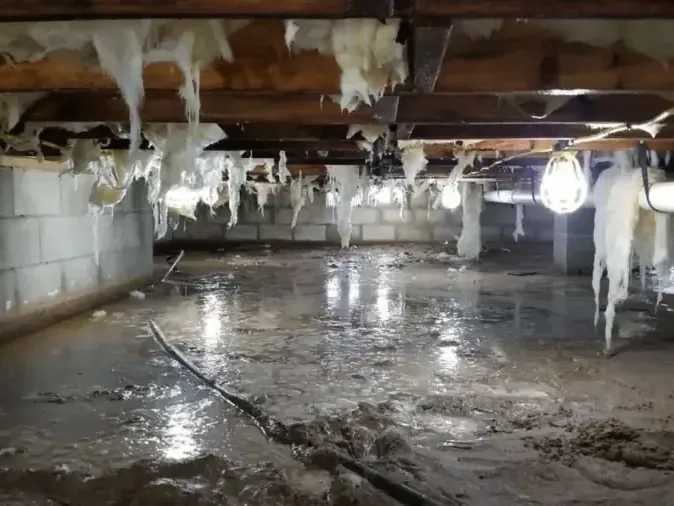
First steps for crawl space water cleanup
- 1Check from outside. Look for pooled water, a sagging vapor barrier or damp insulation from the access panel, and stay out if it smells of sewage.
- 2Find the source. A supply pipe, a drain, groundwater after rain or a plumbing fitting can be feeding the water, and the source decides the cleanup.
- 3Call before it climbs. Water under the floor can wick into joists and rise into walls, so pumping early protects the rooms above.
- 4Document it. Photograph the water, the insulation and the ground from the opening before anything is removed.
How crawl space water cleanup gets handled here
Two dry-outs can look the same on the first afternoon. The readings, the order of the work and the paper trail are what set a complete one apart.
Around-the-clock dispatch
Rain and plumbing failures do not wait for business hours, so the pumping and drying crew works nights and weekends too.
IICRC S500 drying standard
Joists and subfloor are dried until moisture readings match the dry reference, which protects the floor structure above.
Claim ready documentation
Before and after photos, readings and a note on the source are kept together for the adjuster.
Storm season know-how
Heavy rain such as Hurricane Helene in September 2024 swelled creeks and flooded roads across Gwinnett County, a reminder that wet ground can send water under houses.
What does crawl space water cleanup cost in Dacula, GA?
A damp crawl space with no standing water often costs $1,500 to $3,000, while pumping after a storm or leak runs $3,000 to $6,000 and sewage or long term water can pass $12,000.
Four things move the number: the water category, how many square feet got wet, the material class and how soon drying began. The water damage cost calculator gives a planning range, and the firm figure comes after the walkthrough.
Damp, no standing water
$1,500 to $3,000- Wet insulation pulled
- One dehumidifier set
- Framing readings
Standing water after rain or a leak
$3,000 to $6,000- Pumping and extraction
- New vapor barrier
- Joists and subfloor dried
Sewage or long term water
$6,000 to $12,000+- Category 3 cleaning
- Framing treated
- Extended drying
From first reading to dry: crawl space water cleanup
- 1
Pump the water
Submersible pumps and extractors clear standing water and drain low spots in the ground.
- 2
Remove wet materials
Soaked insulation and torn vapor barrier come out, and the bare framing is exposed.
- 3
Dry the framing
Dehumidifiers and air movers work on joists and subfloor while meters track the moisture content.
- 4
Restore the barrier
A fresh vapor barrier goes down once readings show dry framing, which slows future moisture.
Crawl space water is easy to ignore because nobody lives there. Meanwhile the insulation soaks, the joists stay damp and humid air rises into the floor above, so the cleanup aims at the framing, not just the puddle. The result is a floor system that stays damp for weeks.
What the crew does under the floor
- Pumps pooled water and clears low spots
- Removes wet insulation that has sagged or soaked
- Replaces a torn or displaced vapor barrier
- Dries joists and subfloor to a measured goal
- Treats framing after sewage or long term water
- Checks the rooms above for moisture too
Water that keeps coming back
A crawl space that floods after every rain needs more than pumping. Drainage, gutters and plumbing leaks all feed it, and the drying crew documents what it finds so the owner can hand the source to the right trade. Soil that stays wet, a downspout that empties near the foundation and a slow drain leak can all keep the space damp between storms. The crawl space moisture check is a quick way to see whether readings point to a larger problem.
Water under the house? Describe what you see to the restoration team.
Talk to dispatch about crawl space water cleanup: (888) 532-4616Sewage in the space
If the water comes from a failed drain, it is Category 3, and the crawl space needs containment, removal of porous materials and antimicrobial treatment. That work falls under sewage backup cleanup, and the framing is dried afterward before a barrier goes back. Readings on the joists show how far the problem reached.
Covering Dacula, GA and the roads around it
The restoration team serves Dacula and the wider 30019 ZIP, including Hamilton Mill, across the east side of Gwinnett County, and handles emergencies day or night for homes, storefronts and small commercial spaces.
View the full service areaCrawl Space Water Damage: what homeowners ask
Can water under the house hurt the floors?
Yes. Moisture climbs into joists and subfloor, so flooring above can cup, buckle or soften if the framing stays wet. A musty smell in the house above is often the first warning.
Does wet insulation have to be removed?
Usually, because soaked insulation stays heavy, drops away from the floor and holds moisture against the framing. Fresh insulation goes in only after the framing reads dry.
What if the water is sewage?
That is Category 3. The area is contained, porous materials come out and surfaces are treated before any drying equipment is set.
Will a vapor barrier fix the problem?
It slows ground moisture, but it will not stop a leak or flooding. The source has to be repaired and the framing dried first. A plumber, a grading fix or a sump pump may be part of that.
Can the crew work with water still coming in?
Pumping can start, but lasting drying needs the source stopped, so a plumber or drainage fix often runs alongside the cleanup.
How long does a crawl space take to dry?
Several days is common, and longer when the water sat for weeks. Readings on the joists decide when the equipment comes out. The drying time estimator offers a rough starting range.
Water under the house keeps working on the floor above it
Describe the crawl space and the restoration team will plan pumping, removal and drying for the framing.