Crawl Space Water Damage in Jefferson, GA
Water under a house is easy to miss until floors feel soft or the air smells damp. The extraction crew pumps standing water, removes wet insulation and dries the joists and subfloor, with readings kept for the claim.
(888) 532-4616Describe the water below the floor- Standing water pumped out
- Joists and subfloor dried
- Vapor barrier checked
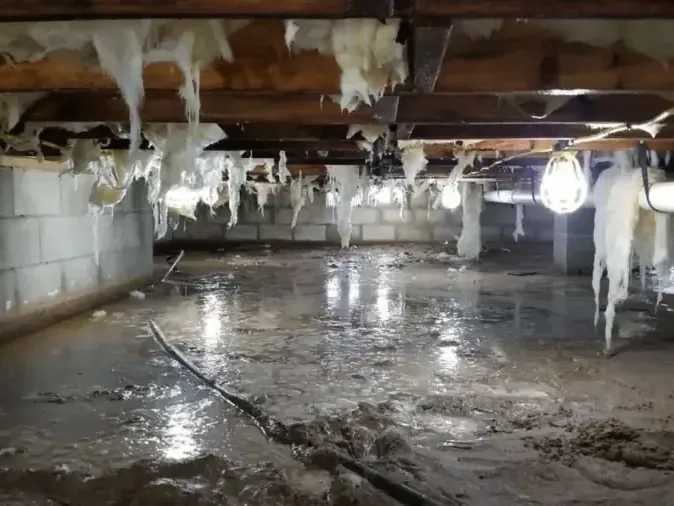
First steps for crawl space water cleanup
- 1Assess the space. The crew enters in protective gear, checks for standing water, wet insulation and a torn vapor barrier, and photographs conditions.
- 2Pump and extract. A pump clears the standing water, then extraction wands work the low spots and wet soil.
- 3Remove the wet layer. Soaked insulation is pulled and bagged, and a damaged vapor barrier is cut out so the framing can dry.
- 4Dry and replace. Dehumidifiers and air movers dry joists and subfloor, and a new vapor barrier goes down once readings are acceptable.
How crawl space water cleanup gets handled here
Two dry-outs can look the same on the first afternoon. The readings, the order of the work and the paper trail are what set a complete one apart.
Any hour response
Water under a house can keep spreading after rain, so the response team schedules pumping at night or on weekends when conditions call for it.
S500 and wood framing
The IICRC S500 standard sets drying goals for wood framing and subfloor, so joists are read with a moisture meter until they match a dry reference.
Documented conditions
Photos of the standing water, the removed insulation and each reading let the adjuster see the starting point and the finish.
Red clay and rain
Jackson County sits in the Georgia Piedmont, where red clay soils are common, and the drying team notes how rain runoff and grading around a house can feed water under it.
What does crawl space water cleanup cost in Jefferson, GA?
Crawl space jobs usually cost $1,500 to $12,000+, depending on whether the space is merely damp, holds standing water or has been affected by sewage or long term moisture.
Four things move the number: the water category, how many square feet got wet, the material class and how soon drying began. The water damage cost calculator gives a planning range, and the firm figure comes after the walkthrough.
Damp, no standing water
$1,500 to $3,000- Wet insulation pulled
- Dehumidifier running
- Framing readings taken
Standing water to pump
$3,000 to $6,000- Pump and extraction work
- New vapor barrier
- Joists and subfloor dried
Sewage or long term water
$6,000 to $12,000+- Category 3 cleaning
- Antimicrobial on framing
- Extended drying plan
From first reading to dry: crawl space water cleanup
- 1
Look and photograph
Conditions in the space are documented with photos and moisture readings before anything is pumped, bagged or cut.
- 2
Pump the water
Pumps and extraction wands clear the standing water and the wet surfaces around the access hatch.
- 3
Strip the wet layer
Saturated insulation and any torn vapor barrier come out so the framing above can finally dry.
- 4
Dry and verify
Dehumidifiers and air movers run until joist and subfloor readings reach their dry goals.
A crawl space collects water from plumbing leaks, rain runoff and sewer problems, and it stays wet because little air moves through it. Until the water is out and the framing is dry, the floor above can soften and the air indoors can turn musty.
Work done below the floor
- Pumping and extraction of standing water
- Wet insulation removed and bagged
- Vapor barrier checked, patched or replaced
- Joists, beams and subfloor read with a moisture meter
- Dehumidifiers and air movers set for tight spaces
- Sewage handled as Category 3 when present
Rain, clay and drainage
Jackson County is in the Georgia Piedmont, where red clay soil is common, and heavy rain anywhere in the region can send runoff toward a house. The crew reads the space as it is: where the water entered, how deep it stands and how much wood is wet. If the source is a plumbing leak above, water extraction and the pipe repair run together, and a Category 3 source such as a sewer backup changes the whole plan.
Water under the floor? Call the drying team and describe what the hatch shows.
Talk to dispatch about crawl space water cleanup: (888) 532-4616Why drying time matters
Wood stays damp for a long time in a closed space, and mold can start in 24 to 48 hours, so equipment should run until joists read dry rather than until the water looks gone. The drying team logs every reading, which also gives the adjuster a clear record. Where the damage sits under a concrete floor instead, the slab leak water damage page describes that case.
Covering Jefferson, GA and the roads around it
Dispatch covers the city and the subdivisions with Jefferson addresses in central Jackson County, from the historic downtown to the industrial parks and commercial corridors, every day of the week, holidays included.
View the full service areaCrawl Space Water Damage: what homeowners ask
How can a homeowner tell a crawl space is wet?
Soft or bouncy floors, a musty smell, higher indoor humidity and visible water at the access hatch are common signs, and a moisture meter confirms them.
Is standing water under a house dangerous?
It can be. Wet insulation, electrical wiring and possible sewage mean the space should be entered only with protective gear, so call before going in.
Does the vapor barrier have to be replaced?
Torn or soaked plastic is usually cut out and replaced once the framing is drying, because it traps moisture against the wood.
How long does crawl space drying take?
A damp space may need only a few days, while standing water or sewage can need longer drying. Readings in the joists decide when equipment leaves.
What if the water is sewage?
That is Category 3 water. The crew sets up containment, removes affected materials and treats the framing. See sewage backup cleanup.
Will insurance pay for crawl space water?
A sudden pipe or appliance leak is often covered, while groundwater and slow seepage usually are not, so the policy and the cause decide.
Can a crawl space smell affect the house?
Yes. Damp insulation and wet wood can send a musty smell upward through the floor, which fades once the space is dried.
Get the water out from under the house
The extraction crew pumps the space, removes wet materials and dries the framing with readings kept for the adjuster.