Structural Drying in Jefferson, GA
After the water is removed, moisture stays in framing, subfloor and drywall. The drying crew sets air movers and dehumidifiers by the numbers, reads moisture every day and moves equipment until the structure meets its dry goal.
(888) 532-4616Plan the drying equipment- LGR dehumidifiers sized by room
- Psychrometric readings daily
- Dry standard documented
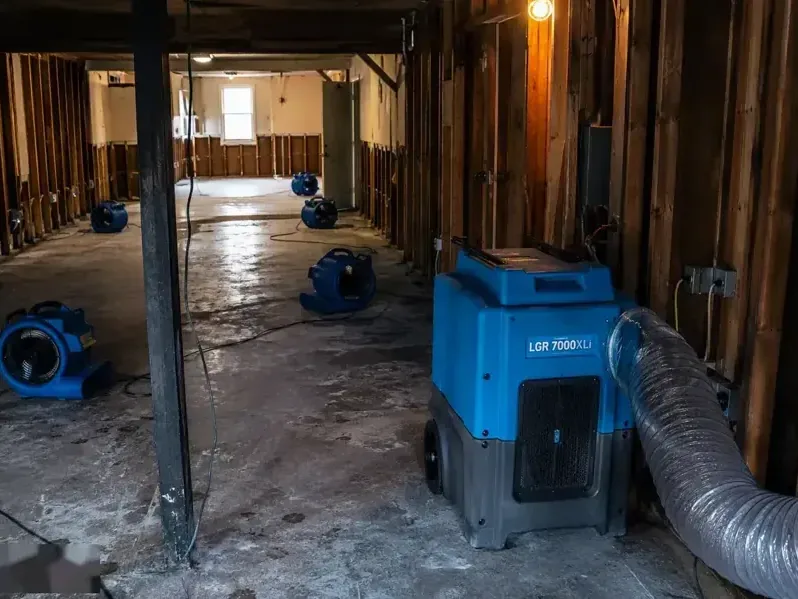
First steps for structural drying
- 1Measure the room. Temperature, humidity and material moisture are logged first so the equipment can be sized to the space and the water category.
- 2Place the equipment. Air movers aim across wet surfaces while dehumidifiers pull the moisture out of the air and keep the room closed.
- 3Read every day. Moisture meters and a hygrometer track progress, and fans are moved or removed as spots reach dry.
- 4Confirm and remove. Final readings are compared with a dry reference before the equipment leaves the building.
How structural drying gets handled here
Two dry-outs can look the same on the first afternoon. The readings, the order of the work and the paper trail are what set a complete one apart.
Equipment on call
Drying can start any evening or weekend, so the response team stages air movers and dehumidifiers outside business hours when a structure is soaked.
S500 psychrometrics
The IICRC S500 standard ties drying to temperature, humidity and grain readings, so the crew works from a measured goal instead of a fixed number of days.
Logs for the adjuster
Daily readings, equipment counts and run times are kept in one log, which shows an adjuster why the equipment stayed as long as it did.
Housing know-how
Subdivisions with Jefferson addresses, from Heritage at Jefferson to Hampton Ridge, include many newer single family houses, so the crew sizes equipment to each floor plan.
What does structural drying cost in Jefferson, GA?
Structural drying alone usually costs $1,200 to $10,000+, with the figure set by the number of rooms, the materials and how many days of equipment the readings call for.
Four things move the number: the water category, how many square feet got wet, the material class and how soon drying began. The water damage cost calculator gives a planning range, and the firm figure comes after the walkthrough.
One or two rooms
$1,200 to $2,500- Fans and an LGR unit
- Daily readings
- Short drying run
Several rooms or hardwood
$2,500 to $5,000- Drying mats on hardwood
- Added dehumidifier capacity
- Psychrometric logs
Class 4, dense materials
$5,000 to $10,000+- Desiccant dehumidifiers
- Concrete and plaster drying
- Long monitoring run
From first reading to dry: structural drying
- 1
Assess and size
Moisture and humidity readings decide how many air movers and dehumidifiers the rooms need.
- 2
Set up and close
Equipment goes in, doors and windows stay shut, and the drying space is kept consistent.
- 3
Monitor daily
Readings are logged, and equipment is moved to wet spots as dry areas are released.
- 4
Release the space
When every material reaches its dry goal, equipment is removed and the final log is saved.
Drying a structure is a measured process. Air movers move moisture off surfaces, dehumidifiers remove it from the air, and daily readings prove it is working. Without the readings, a house can look dry while framing and subfloor stay wet. That is why equipment is never taken out on a guess.
What structural drying includes
- Air movers placed across wet floors and walls
- LGR dehumidifiers sized to the room volume
- Drying mats for hardwood and plank flooring
- Desiccant dehumidifiers for dense materials
- Daily meter and hygrometer readings
- A final log that documents the dry standard
Equipment sized to each house
A small kitchen leak and a flooded lower level need very different equipment, and the readings tell the crew which one it is. Newer subdivisions with Jefferson addresses, such as Heritage at Jefferson and Hampton Ridge, get equipment sized to the actual floor plan, and airflow and humidity are managed room by room. Hardwood, plaster and concrete dry more slowly and may call for mats or desiccant units.
Walls or floors still damp? Call the drying crew and ask about equipment.
Talk to dispatch about structural drying: (888) 532-4616When drying is done
Drying is finished when the readings say so, not when the room feels dry. The final log shows each material reaching its goal, which matters to the adjuster and to the contractor who rebuilds. Standing water comes first through water extraction, and sewage sources use sewage backup cleanup before any drying begins.
Covering Jefferson, GA and the roads around it
Dispatch covers the city and the subdivisions with Jefferson addresses in central Jackson County, from the historic downtown to the industrial parks and commercial corridors, every day of the week, holidays included.
View the full service areaStructural Drying and Dehumidification: what homeowners ask
How many fans and dehumidifiers will a job need?
That depends on the room volume, the materials and the water category. The crew calculates from readings, so a small leak may need a few units and a large loss many more.
Why does equipment stay for several days?
Water hides in framing, subfloor and behind baseboards. Equipment stays until meters show those materials at their dry goals, not until the surface feels dry.
Is the noise and heat normal?
Yes. Air movers and dehumidifiers are loud and add warmth to the room, which helps drying. Doors and windows stay closed so the space can stay controlled.
Can hardwood floors be dried instead of replaced?
Sometimes. Drying mats can pull moisture from boards when the damage is caught early, but cupped or buckled hardwood that stays distorted is replaced.
Does drying equipment raise the power bill?
It does add to electricity use during the job. The crew lists equipment and run times in the log, which an adjuster can use when reviewing the claim.
What does the final reading prove?
It shows each wet material returned to its dry goal, which protects the rebuild from trapped moisture and gives the adjuster proof that drying was completed.
Let the readings decide when the structure is dry
The drying crew sizes the equipment, reads moisture daily and records the dry standard for the claim.