Slab Leak Water Damage in Auburn, GA
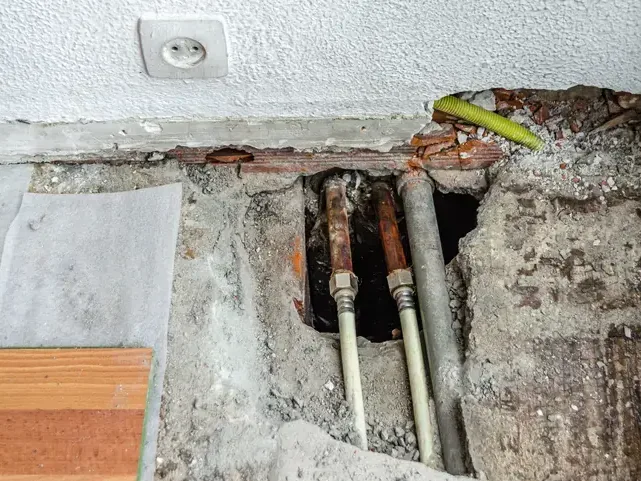
Water from a pipe buried in concrete can only rise into the flooring or creep toward the walls, often for weeks unnoticed. Once the plumber fixes the pipe, the drying crew opens the wet areas and brings the concrete back to a dry reading.
(888) 532-4616Damp floor, no visible leak? Call- Concrete moisture mapped
- Only wet flooring lifted
- Slab dried to a measured goal
First steps for slab leak cleanup
- 1Try the meter check. Shut every faucet, the ice maker and the washer, then watch the dial on the water meter for a few minutes.
- 2Notice the clues. Tile that feels warm underfoot, carpet that never dries, a faint hiss under the floor or a bill that suddenly climbs.
- 3Stop a hot-water leak. If the warm patch points to a hot pipe, close the heater's cold supply valve and turn the heater off.
- 4Book a leak-detection plumber. The pipe gets repaired or rerouted first, and the water damage gets dried after.
How slab leak cleanup gets handled here
Two dry-outs can look the same on the first afternoon. The readings, the order of the work and the paper trail are what set a complete one apart.
Around-the-clock dispatch
Dispatch never closes, because water trapped under flooring keeps spreading toward baseboards until the pipe is off.
Held to IICRC S500
Concrete stores water deep in the slab, so meter readings steer the drying and the equipment stays until the slab reads like a dry reference area.
Records for the adjuster
The opened floor gets photographed, wet areas get mapped and each day's readings get logged, because insurers often split the pipe from the water damage.
Local housing know-how
The median home here dates to 1990, and townhome communities like Harmony and Trinity Station put kitchens and baths side by side behind shared walls.
What does slab leak cleanup cost in Auburn, GA?
Drying out after a slab leak here usually costs $2,000 to $7,500 on top of the plumber's bill, with the spread under the flooring and any wet hardwood or cabinetry setting where a job lands.
Four things move the number: the water category, how many square feet got wet, the material class and how soon drying began. The water damage cost calculator gives a planning range, and the firm figure comes after the walkthrough.
One spot, hard flooring
$2,000 to $3,500- Tile or plank raised
- Mats drawing water from concrete
- Baseboards off for wall checks
Water across several rooms
$3,500 to $7,500- Wet carpet and pad hauled out
- Drywall bottoms dried
- Concrete read each day
Wood floors or cabinetry
$7,500 to $15,000+- Hardwood saved or replaced
- Toe kicks pulled for airflow
- A longer drying schedule
From first reading to dry: slab leak cleanup
- 1
Read the concrete
Meters show how far moisture moved beneath the flooring and up into the drywall.
- 2
Open only what is wet
Pad, plank or tile that holds water against the concrete is taken up; dry areas stay put.
- 3
Draw the water out
Mats on the slab, air movers along the walls and an LGR unit pull moisture from the concrete.
- 4
Confirm the finish
The crew keeps logging until the concrete and walls read like an unaffected area of the house.
A slab leak is a supply or drain pipe leaking inside or beneath a concrete floor. Because the concrete above holds the water down, the leak tends to surface somewhere else first: a soggy patch of carpet, plank edges that curl, or tile that feels warm in one spot.
What a hidden slab leak looks like
- The meter dial turns with every fixture shut
- One area of tile is warm while the rest is cool
- Carpet stays soggy or smells stale for no clear reason
- Grout cracks and tiles start to rock
- The monthly water bill jumps with no change in use
- A faint hiss under the floor in a quiet house
Drying the concrete and the walls
With the pipe fixed or rerouted, the drying crew reads the concrete in a grid and checks each wall where it meets the floor. Pad almost always comes out, click plank and laminate are often raised, and tile stays unless it has broken loose. Concrete gives water back slowly, so mats and dehumidifiers run until the numbers match an unaffected room. When the leak came from a drain instead of a supply pipe, the waste in that water calls for the Category 3 process used in sewage and septic backup cleanup.
Soggy carpet and no leak you can find? Get the concrete checked and dried.
Talk to dispatch about slab leak cleanup: (888) 532-4616Permits and the claim
When a building permit is pulled in Auburn, plumbing and electrical work each need a separate permit from the contractor doing that work, and a city-contracted third-party inspector handles inspections. Insurers often handle the pipe, the cost of opening the concrete and the resulting water damage under different terms, so a dated moisture map and photos taken before tear-out keep that last part clear. Ask your own insurer how your policy reads. Structural drying covers how drying readings work.
Covering Auburn, GA and the roads around it
The restoration team covers all of ZIP 30011, from the downtown storefronts and the historic district to the Town Center, Harmony and Trinity Station, plus the homes and businesses along Atlanta Highway and Mount Moriah Road.
View the full service areaSlab Leak Water Damage: what homeowners ask
Is it a slab leak or a leak inside a wall?
With the house quiet and every fixture off, a meter dial that still turns while walls and ceilings stay dry points below the floor. Leak-detection plumbers pin it down with listening gear and thermal cameras.
Will all of the flooring be torn out?
Rarely. Pad is the usual casualty, click plank and laminate get raised where they trap water, and most tile can stay. The plumber might cut a small opening in the concrete right over the pipe.
How many days does wet concrete need?
A small damp patch often reads dry in three to five days. Concrete that sat wet for weeks gives water up slowly and can need a week or more of mats and dehumidifiers.
Does a homeowners policy pay for slab leaks?
The water damage from a sudden leak is often covered, but the plumbing fix and the cost of reaching the pipe may be treated differently. Read your policy or ask your own insurer.
Could mold grow under the flooring?
Yes. It is dark and damp under carpet and plank, and mold can take hold within 24 to 48 hours, which is why drying starts as soon as the pipe is fixed.
Is a drain leak under the slab handled differently?
Yes. Drain water carries waste, so anything porous it soaked counts as Category 3: flooring comes out and the area is treated with an EPA-registered antimicrobial before drying.
Floor damp with no leak in sight? Have the slab dried right.
Water beneath the floor works into baseboards and drywall quietly, and the drying crew heads out at any hour.