Frozen Pipe Cleanup in Dacula, GA
A frozen pipe often splits quietly and only leaks once the ice melts, so the damage shows up when the weather warms. The restoration team removes the water, opens wet walls and ceilings and dries the structure after a freeze.
(888) 532-4616Report the thaw leak- Thaw leaks mapped
- Attic pipes checked
- Two levels dried
First steps for frozen pipe cleanup
- 1Shut off the main. Close the main valve as soon as water appears, then open faucets to drain the pipes that are left.
- 2Thaw gently. Warm a frozen pipe slowly with a hair dryer, never a torch, and only after the water is off and the area is dry.
- 3Check the ceilings. Look under attic pipes and along exterior walls for stains, since thawing pipes often leak where nobody is looking.
- 4Call for drying. Describe the wet rooms and photograph them, and the restoration team will plan extraction and opening.
How frozen pipe cleanup gets handled here
Two dry-outs can look the same on the first afternoon. The readings, the order of the work and the paper trail are what set a complete one apart.
Around-the-clock dispatch
Freezes hit overnight and thaws happen on weekends, so the extraction crew is reachable day or night when a pipe lets go.
IICRC S500 drying standard
Insulated attics and exterior walls stay damp longer, so S500 drying keeps going until cavity readings match dry reference points.
Claim ready documentation
The date of the freeze, the location of the split and each day's readings are written down so the adjuster can follow the loss.
Ice storm know-how
The late January 2026 ice storm in north Georgia was followed by extreme cold, the sort of freeze that tests exposed pipes across Gwinnett County.
What does frozen pipe cleanup cost in Dacula, GA?
After a freeze, one wall or room costs $1,500 to $3,000, an attic pipe over a wet ceiling runs $3,000 to $7,000, and a long run in an empty home can pass $15,000.
Four things move the number: the water category, how many square feet got wet, the material class and how soon drying began. The water damage cost calculator gives a planning range, and the firm figure comes after the walkthrough.
One wall or room
$1,500 to $3,000- Standing water extracted
- Wall cavity drying
- Daily moisture readings
Attic pipe, ceiling below
$3,000 to $7,000- Ceiling drywall removed
- Insulation pulled
- Two levels dried
Empty home or a long run
$7,000 to $15,000+- Several rooms opened
- Subfloor and framing dried
- Extended drying
From first reading to dry: frozen pipe cleanup
- 1
Stop the leak
The main is closed and a plumber repairs the split so drying does not fight running water.
- 2
Remove standing water
Wands and pumps clear floors, and wet carpet or pad is lifted from the thawed area.
- 3
Open the cavities
Meters and a thermal camera find wet insulation and drywall, which are cut out of walls and ceilings.
- 4
Dry on every level
Air movers and dehumidifiers run on each wet floor until readings settle at the dry reference.
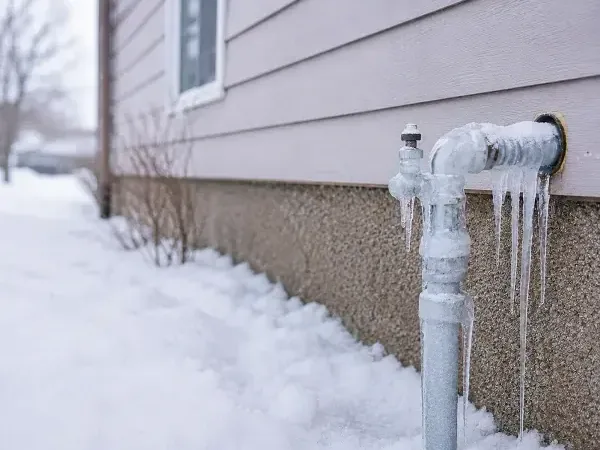
Ice blocks a pipe, pressure builds behind the blockage and the pipe splits. Nothing leaks until the ice melts, which is why a freeze can end with water pouring through a ceiling on the first warm afternoon. Pipes in attics, garages and outside walls are the first to go.
After the cold snap
- Stains on ceilings under attic pipes
- Wet insulation and sagging drywall
- Water behind exterior wall cabinets
- Dripping through light fixtures or fans
- Low water pressure after a freeze
- Garage or utility room floors that are soaked
What the January 2026 freeze showed
Gwinnett County saw an ice storm in late January 2026, with about 4,200 customers losing power on January 25 and extreme cold after it. Events like that test exposed pipes in garages, attics and outside walls, and the damage often waits for the thaw. The owner handles plumbing repairs inside the home, and the restoration team handles the water that comes out. Notes on when the cold hit and when the leak showed help the claim.
Pipe split after a freeze? Describe where the water is showing.
Talk to dispatch about frozen pipe cleanup: (888) 532-4616Drying across two floors
Freeze leaks often wet an attic floor and the ceiling beneath it, so the job runs on two levels. The ceiling is opened, wet insulation is bagged, and equipment dries both the attic cavity and the room. Related work is explained under burst pipe cleanup and ceiling leak water damage. Daily readings in both areas show when the cavities are ready to close.
Covering Dacula, GA and the roads around it
The restoration team serves Dacula and the wider 30019 ZIP, including Hamilton Mill, across the east side of Gwinnett County, and handles emergencies day or night for homes, storefronts and small commercial spaces.
View the full service areaFrozen Pipe Cleanup: what homeowners ask
When does a frozen pipe start to leak?
Usually when the ice melts. The split opens, water flows and the damage appears as the temperature rises, sometimes while no one is home. Water can run for a long time before anyone notices.
Should I turn off the water at once?
Yes. Closing the main stops the flow, and draining the pipes limits how much water is left to leak while a plumber repairs the split.
Which pipes freeze first?
Pipes in attics, garages and exterior walls are the usual trouble spots, because they sit in cold air with little insulation around them. Adding insulation or heat there is a job for a plumber or builder.
Is the water from a split pipe dirty?
It starts clean, so many materials can be dried, but water that sits or soaks carpet and pad can move toward gray water.
Will insurance pay for freeze damage?
Many policies cover sudden freeze breaks, with conditions about heat and care for the property, so your insurer decides. Keep photos and receipts.
How long does a frozen pipe job take?
Drying usually runs three to five days, a bit longer when an attic and ceiling are both wet. The drying time estimator gives a rough range.
A thaw leak keeps soaking the house until the water is removed
Describe where water is showing after the freeze and the restoration team will plan extraction, opening and drying.