AC and Air Handler Leaks in Dacula, GA
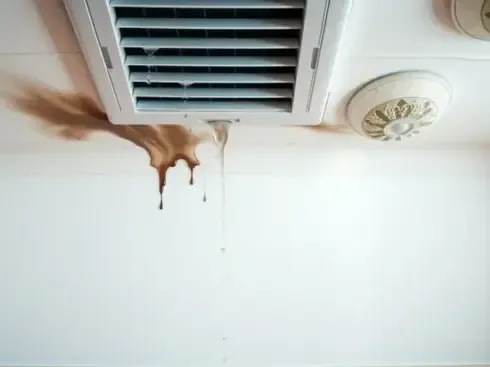
A clogged condensate drain or an overflowing pan can drip into a ceiling for days before a stain spreads. The restoration team opens the wet section, removes soaked insulation and dries the ceiling, attic and room below before mold gets a start.
(888) 532-4616Report the ceiling drip- Ceiling and attic readings
- Wet insulation bagged
- Small cut outs first
First steps for AC leak cleanup
- 1Turn off the unit. Switch the air conditioner off at the thermostat so it stops making condensate while the drain is clogged.
- 2Catch the drip. Set a bucket under the stain and poke a small hole in a bulging ceiling to let trapped water drain safely.
- 3Clear the pan. If it is safe to reach, empty the drain pan and note whether the condensate drain is blocked.
- 4Call for drying. The restoration team checks the ceiling and attic with meters, then plans removal and drying of what is wet.
How AC leak cleanup gets handled here
Two dry-outs can look the same on the first afternoon. The readings, the order of the work and the paper trail are what set a complete one apart.
Around-the-clock dispatch
Air handlers overflow at night and on weekends too, so the drying crew is available whenever a ceiling starts to drip.
IICRC S500 drying standard
Attic insulation and ceiling drywall are dried to a reference reading under S500, because surface dryness hides a damp cavity.
Claim ready documentation
Photos of the stain, the pan and the drain, plus daily readings, give the adjuster the whole story of the leak.
Attic and ceiling know-how
Air handlers in attics sit above finished ceilings, so a pan overflow usually shows first as a stain and a soft spot in the drywall.
What does AC leak cleanup cost in Dacula, GA?
A ceiling stain caught early often costs $800 to $1,800, a wet ceiling with soaked insulation runs $1,800 to $4,000, and damage that reaches walls and floors can pass $8,000.
Four things move the number: the water category, how many square feet got wet, the material class and how soon drying began. The water damage cost calculator gives a planning range, and the firm figure comes after the walkthrough.
Ceiling stain, caught early
$800 to $1,800- Ceiling and attic readings
- Small drywall section out
- Dehumidifier and fans
Wet ceiling and insulation
$1,800 to $4,000- Ceiling drywall removed
- Wet insulation bagged
- Attic and room drying
Ceiling, walls and floor
$4,000 to $8,000+- Walls and flooring dried
- Rooms below checked
- Extended monitoring
From first reading to dry: AC leak cleanup
- 1
Find the wet area
Moisture meters and a thermal camera outline the stain, the attic floor and nearby walls.
- 2
Open the ceiling
A section of drywall is cut away so water can drain and the cavity can breathe.
- 3
Remove wet insulation
Insulation that has soaked is bagged out because it holds water against the ceiling.
- 4
Dry and confirm
Air movers and a dehumidifier run until ceiling and attic readings match dry areas.
Air conditioners pull water out of the air all day, and that water has to go somewhere. When the drain clogs or the pan cracks, it spills onto the attic floor or the ceiling below, and the damage grows quietly until a brown stain finally appears in the room.
Signs the AC is leaking
- A ceiling stain that grows when the unit runs
- Water in the drain pan or around the air handler
- Drywall that sags or feels soft near a vent
- A musty smell near the return or in the hallway
- Wet insulation visible in the attic
- A float switch that shut the system off
What the drying team handles
The drying team does not repair the HVAC system, so a technician clears the drain or replaces the pan while the restoration side opens the wet ceiling, removes soaked insulation and dries the attic floor and the room below. Wet drywall that cannot dry flat is cut out in sections, usually smaller than owners fear. Daily readings show when the cavity is dry enough to close, and the opening is left for the repair crew to patch.
AC water coming through the ceiling? Tell the restoration team what you see.
Talk to dispatch about AC leak cleanup: (888) 532-4616Why it needs fast drying
Wet insulation and drywall hold water against wood framing, and after 24 to 48 hours that moisture can support mold. Opening the ceiling early lets air reach the cavity. For related work, see ceiling leak water damage and structural drying, which cover the same ceiling and framing steps.
Covering Dacula, GA and the roads around it
The restoration team serves Dacula and the wider 30019 ZIP, including Hamilton Mill, across the east side of Gwinnett County, and handles emergencies day or night for homes, storefronts and small commercial spaces.
View the full service areaAC and Air Handler Leaks: what homeowners ask
Why is my ceiling wet when it has not rained?
A clogged condensate drain or an overflowing pan can put water above the ceiling even on a dry day, and the stain shows once the drywall soaks through. An attic air handler is a common source.
Does the ceiling have to come down?
Not always. A small stain on firm drywall can be dried through a small cut, while sagging or soft sections are removed so the cavity can dry. The tech reads the area before deciding.
Is AC water dirty?
Condensate starts clean, but it picks up dust and slime in the pan and drain, so soaked insulation and drywall are handled with care and often removed.
Who fixes the air conditioner?
An HVAC technician repairs the drain, pan or coil. The drying team works on the wet ceiling and attic, and the two jobs usually run side by side.
Will insurance cover an AC leak?
Many policies treat sudden overflow differently from slow seepage, so your insurer decides. Photos of the pan, the stain and the readings help the claim file.
How long does the ceiling take to dry?
Most ceilings dry in three to four days once opened, and the drying time estimator gives a rough range for larger areas.
An air handler drip keeps spreading until the ceiling is opened and dried
Describe the stain and where the air handler sits, and the restoration team will plan the opening and drying.