Frozen Pipe Cleanup in Jefferson, GA
Pipes rarely leak while they are frozen. The water arrives when the ice thaws, often in an attic, outside wall or crawl space. The drying team extracts it, opens the ceiling or wall that got wet and dries the cavity.
(888) 532-4616Report the thawed pipe- Thaw leaks traced
- Ceilings and walls opened
- Dated readings for claims
First steps for frozen pipe cleanup
- 1Close the main. As soon as a thaw shows a leak, close the main valve so the split pipe stops adding water.
- 2Extract the water. Standing water is removed from floors, and the crew checks where it ran through an attic floor or exterior wall.
- 3Open the ceiling. Wet ceiling drywall and insulation below an attic break are cut out so air and equipment can reach the framing.
- 4Dry and document. Air movers and dehumidifiers run on both levels while dated readings and photos build the claim record.
How frozen pipe cleanup gets handled here
Two dry-outs can look the same on the first afternoon. The readings, the order of the work and the paper trail are what set a complete one apart.
Cold snap response
Leaks show up when the weather warms, so the response team keeps evening and weekend visits open and starts with the ceilings that are dripping.
S500 drying standard
The IICRC S500 standard sets targets for wet drywall, insulation and framing, so equipment stays until readings match a dry reference.
Claim ready records
Dated photos of the split section, the removed materials and each reading help an adjuster tie the loss to the freeze.
Freeze season know-how
Georgia's winter storm emergency ran from January 30 to February 6, 2026, with an Extreme Cold Warning for North and Central Georgia on February 1, so freeze breaks are a known cold weather job.
What does frozen pipe cleanup cost in Jefferson, GA?
Frozen pipe jobs often run $1,500 to $15,000+, from a single wall or room up to an empty house where water ran for a long stretch before anyone noticed.
Four things move the number: the water category, how many square feet got wet, the material class and how soon drying began. The water damage cost calculator gives a planning range, and the firm figure comes after the walkthrough.
One wall or room
$1,500 to $3,000- Water extracted
- Cavity opened and dried
- Daily readings
Attic pipe, ceiling below
$3,000 to $7,000- Ceiling drywall cut out
- Insulation removed
- Two levels dried
Empty house, long run
$7,000 to $15,000+- Several rooms opened
- Subfloor and framing dried
- Extended drying
From first reading to dry: frozen pipe cleanup
- 1
Locate the split
Moisture readings and a thermal camera trace the wet path back to the frozen section of pipe.
- 2
Pull the water
Extraction clears the floors, and soaked insulation is bagged and removed from the attic.
- 3
Open and dry
Ceiling and wall sections come out where readings are high, and fans work the open cavity.
- 4
Final check
Readings on both levels must reach their dry goals before any equipment leaves.
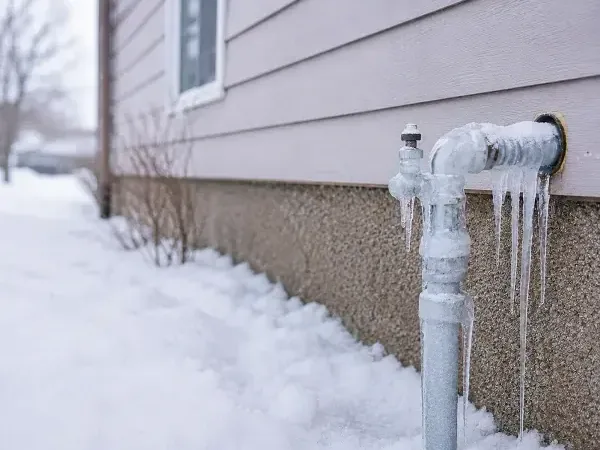
Ice blocks a pipe, pressure builds, and the pipe splits long before water appears. The leak starts when temperatures rise, so a house can look fine overnight and be flooding by mid-morning. The first job is shutting the water at the main.
What happens after a thaw
- Main valve closed before anything else
- Standing water extracted from floors and carpet
- Ceiling drywall below an attic break cut out
- Wet insulation bagged and removed from the attic
- Wall cavities opened where readings are high
- Daily moisture logs kept for the claim
Cold weather in Georgia
North Georgia sees freeze nights every winter, and a few stretches run long enough to put pipes at risk. The National Weather Service office for North and Central Georgia lists the January 21, 2025 winter storm among regional events, and the state's emergency agency reported an Extreme Cold Warning for North and Central Georgia on February 1, 2026, with a higher chance of burst pipes. These are regional notices rather than local damage reports, but they show why attic and exterior wall pipes get watched.
Pipe thawed and leaking? Call the drying team and describe the wet area.
Talk to dispatch about frozen pipe cleanup: (888) 532-4616Burst pipe or frozen pipe
The cleanup follows the same path as any split pipe: extraction, opening the wet cavity and drying with readings. What differs is timing, because freeze breaks often release water all at once during a thaw. The burst pipe cleanup page covers other causes, and heavy attic leaks use ceiling leak water damage steps.
Covering Jefferson, GA and the roads around it
Dispatch covers the city and the subdivisions with Jefferson addresses in central Jackson County, from the historic downtown to the industrial parks and commercial corridors, every day of the week, holidays included.
View the full service areaFrozen Pipe Cleanup: what homeowners ask
Should a frozen pipe be thawed on purpose?
Only slowly and carefully, and a plumber is the safer choice. Once water flows, close the main valve if there is any sign of a split.
Why does a leak appear only after the thaw?
Ice plugs the split while it is frozen. When the ice melts, the plugged crack opens, and pressurized water flows into the wall or ceiling.
Which pipes freeze first?
Pipes in attics, exterior walls, crawl spaces and unheated garages are the usual targets, because they sit outside the heated part of the house.
Does the attic insulation need to be replaced?
Wet insulation is removed because it holds water against the framing and ceiling. Dry sections nearby can often stay.
Will insurance cover frozen pipe damage?
Sudden freeze breaks are often covered, but policies may expect reasonable steps to protect the house, so dated photos help the adjuster.
How long does cleanup take?
Extraction fills the first visit, and drying commonly runs a few days. Empty houses with long runs of water need more time and monitoring.
Is a frozen pipe the same as a burst pipe?
Not quite. A frozen pipe is blocked by ice, while a burst pipe has split open, and the water usually flows only after the thaw.
Dry the thaw damage before it settles into the walls
The drying team extracts the water, opens the wet ceiling or wall and keeps dated readings for the claim.