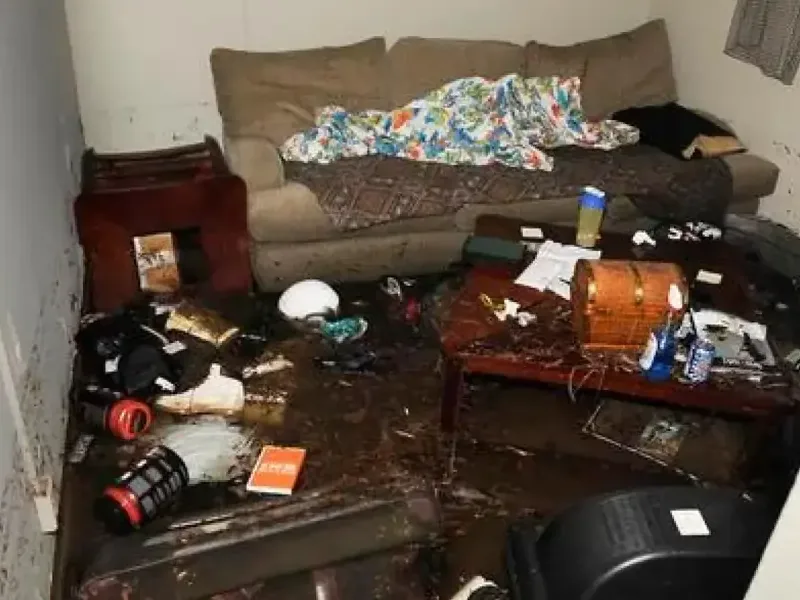
Braselton has the Mulberry River and Duncan Creek in its planning records, and that changes how a wet house should be treated. Water that comes in from outside has crossed soil, lawns and pavement first, so it is not the same as a leaking pipe.
Key takeaways
- Creek, river and runoff water carries soil and contaminants, so cleanup treats it as contaminated.
- The Mulberry River is named in Jackson County's 2024 to 2029 hazard mitigation plan as a waterway where flooding can cause significant damage.
- Roofs, driveways and parking lots shed water fast, and the Town bases its stormwater fee on them.
- The Town asks residents to report drainage problems, flooding and pollution to its stormwater program.
- Drying should start as soon as the water is out and the space is safe.
Creek water, river water and pipe leaks are not the same
A pipe leak puts clean supply water in a house. Water that rises from a creek or a flooded yard carries dirt, fertilizer and whatever else lay on the ground.
Storm and flash flood cleanup therefore starts with protective gear and removal, then cleaning, and only then drying.
- Carpet and pad that touched flood water are usually removed.
- Drywall that wicked water above the waterline is cut back.
- Hard surfaces are washed and treated before they are dried.
- Soft goods such as bedding and clothes are sorted for cleaning or disposal.
What the records say about the Mulberry River and Duncan Creek
Jackson County's 2024 to 2029 hazard mitigation plan names the Mulberry River among the waterways where flooding can cause significant damage in Jackson County.
A 2019 Town rezoning site plan near I-85 and Duncan Creek marks the FEMA 100-year flood plain on that site. The Town also monitors the Mulberry River watershed and publishes an annual monitoring report.
None of that is a claim about a particular street or house.
It only shows why creek and river water gets attention, and that Braselton lies in four counties, Jackson, Barrow, Gwinnett and Hall, so records can come from more than one place.
These records are context, not a forecast. A storm that floods one property may leave the next one dry, because roofs, driveways and grading all differ.
How roofs, driveways and parking lots add runoff
The Town created a Stormwater Utility by an ordinance adopted on October 14, 2019. The fee is based on impervious surfaces such as rooftops, driveways and parking lots, and the money goes to drainage maintenance and drainage construction.
Hard surfaces shed rain faster than soil can take it in. The Town describes thunderstorms about one day out of three in summer, with a few bringing hail and strong winds, so heavy runoff is a seasonal pattern.
Roof runoff is easy to overlook. A downspout that empties beside the foundation sends the roof's share of a storm toward the wall.
Signs runoff is reaching a house
- Water running toward the foundation along a driveway or patio.
- Wet carpet along an exterior wall or a garage door.
- A mud mark on the lower wall.
- Water ponding in a low corner of the yard after a storm.
Reporting drainage problems
The Town asks residents to report drainage problems, flooding and pollution to its stormwater program. A report puts the problem on record, and the fee exists to pay for drainage work.
First steps when flood water enters a house
Safety first. Water that has reached outlets or the electrical panel can be energized.
Do not wait for the water to drain on its own. Standing water soaks into drywall and flooring while it sits.
- Stay out of standing water until the power to that area is off.
- Wear gloves and boots, and keep children and pets away.
- Photograph the waterline on walls and furniture.
- Turn off the main breaker only if the panel is dry and can be reached safely.
- Lift valuables and papers above the waterline.
- Do not run a household vacuum on standing water.
- Arrange water extraction quickly, because wet drywall and framing break down fast.
Why summer humidity slows drying
The Town describes the first 90 degree readings arriving by late May, with summer afternoon highs from the high 80s to the low 90s into early September.
Warm, humid air already holds a lot of moisture, so drying a wet house in that weather leans on dehumidifiers more than on open windows.
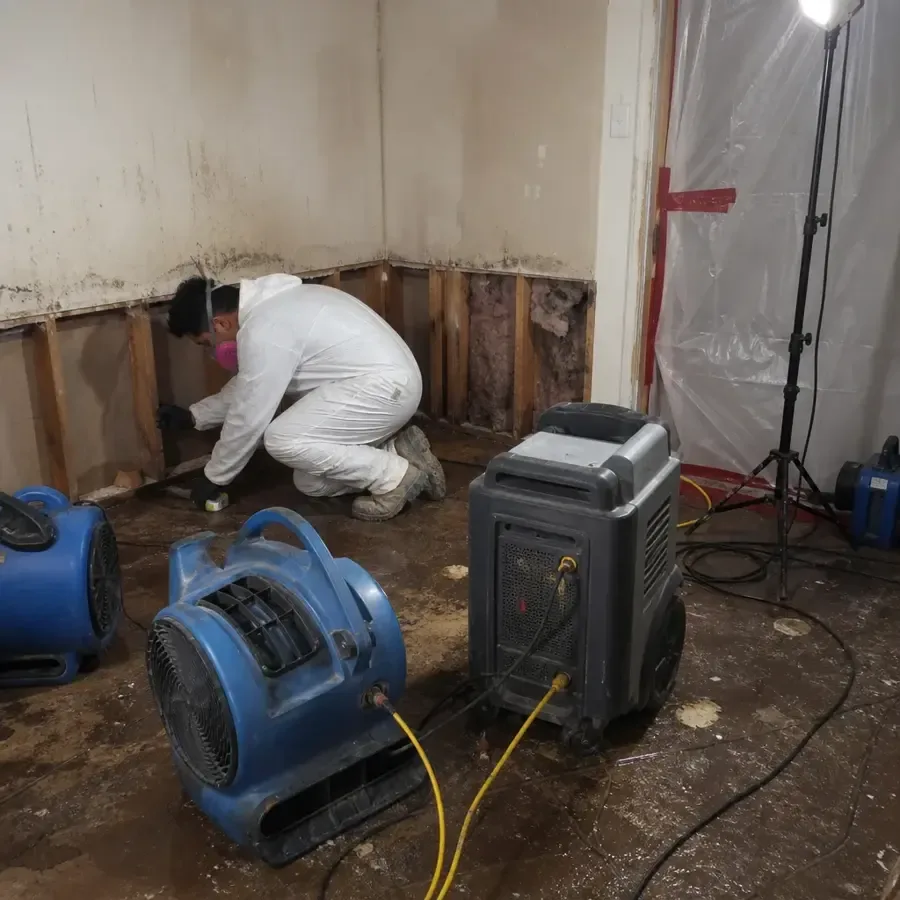
Drying a structure in those conditions is the work of structural drying, and it goes faster when the equipment starts early.
- Keep doors and windows shut while the equipment runs, because outdoor air adds moisture.
- Run dehumidifiers continuously until the readings say stop.
- A lingering damp smell means moisture is still in the structure.
- Do not rely on a household fan to dry framing or drywall.
What flood cleanup involves
Outside water is treated as Category 3, which means the cleanup is stricter than for a clean pipe leak.
Cleaning comes before drying, because drying dirt into wood or drywall makes it harder to remove later.
Extraction and removal
Pumps and extractors remove the standing water. The crew then pulls out flooring and wall materials that cannot be cleaned.
- Mud and silt are shoveled and washed out before drying.
- Wet insulation inside walls is removed.
- Drywall is cut back to dry, clean material.
Cleaning and drying
Framing and hard surfaces are cleaned and treated, then dried with air movers and dehumidifiers. Readings are taken until the structure is back to a normal level.
Questions to settle once the water leaves
A flood map lookup through the FEMA Flood Map Service Center shows whether an address sits in a mapped flood zone. A lookup shows the map, not whether a particular storm will reach the house.
Ask a contractor to explain what was removed and why, and keep the photos and drying readings together for any later paperwork.
Keep the drying log with the photos. It shows how the structure dried and when the equipment came out.
- Which materials were removed, and which were dried in place?
- What do the final moisture readings show?
- Did the runoff come from the yard, a neighbor's lot or a creek?