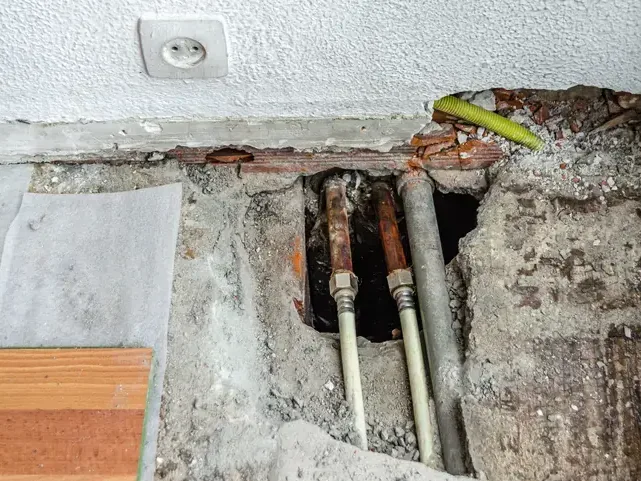
Slab on grade is common in Winder housing, and in many slab homes the copper supply pipes run underneath the concrete. When one of those pipes leaks, the water is out of sight, and the first signs show up on the floor or on the water bill.
Key takeaways
- A slab leak is a supply or drain pipe leaking in or under a concrete slab, so there is often no puddle at first.
- Warm floor spots, running water sounds with every fixture off and a climbing water bill are the classic signs.
- A plumber has to locate the leak before flooring is lifted or the slab is opened.
- Concrete holds water, so the slab and the floor above it both need drying readings.
- Closing the main valve limits the damage while the leak is traced.
What a slab leak is and why it hides
A slab leak is a pipe that leaks inside or under the concrete floor of a house. Because the pipe is buried, the water does not drip into view the way a faucet leak does.
Instead it soaks the soil under the slab, rises through cracks and joints, or travels sideways under walls and flooring. By the time it shows, slab leak water damage can already be spread across a wide area.
A hot water pipe that leaks under the floor often gives itself away with warmth that can be felt through flooring.
Warning signs inside the house
Most slab leaks announce themselves through small changes. Any one of them is worth a closer look, and two together are a strong hint.
A simple meter test helps. With every fixture and appliance off, watch the leak indicator on the water meter. If it keeps moving, water is running somewhere it should not.
Not every sign points to a leak. A single high bill after a long hot spell may come from irrigation or a filled pool, so look for a pattern.
- A warm or hot spot on the floor, which can mean a hot water pipe is leaking below.
- A water bill that climbs with no change in how the house is used.
- The sound of running or hissing water when every tap is closed.
- Damp carpet, buckling wood, lifting tile or cracks that stay wet.
- A drop in water pressure at several fixtures.
- A musty smell that comes from the floor level.
Why pipes under slabs fail
In Winder, many slab homes have copper supply pipes under the concrete, and those pipes are the usual source of a slab leak. Newer builds more often use CPVC or PEX, which have their own failure points.
A buried pipe is out of reach for years, so small problems grow in the dark.
Copper under slabs is a familiar failure point in local homes, and the leak may weep for a long time before anyone notices.
- Age and corrosion thin the pipe wall until it pinholes.
- Rubbing where a pipe passes through or beside concrete wears a spot through.
- A fitting under the floor can loosen or crack.
- Soil movement under the slab can strain a pipe.
What to do when a slab leak is suspected
The goal is to confirm the leak and limit the damage without cutting into anything too early.
- Run the meter test to confirm that water is moving.
- Close the main valve if the leak looks active, and open it only when needed.
- Do not lift flooring or cut into the slab before the leak is located.
- Photograph damp or warm spots and note when the water bill changed.
- Call a plumber who does leak detection and ask for a written finding.
- Move rugs and furniture off damp flooring.
- Photograph the meter reading and the time, so a second reading shows how fast water is moving.
How cleanup works once the leak is found
The plumber's repair and the restoration work fit together. The plumber stops the water, and the restoration crew removes what it soaked and dries the structure.
Opening the floor
Depending on where the leak sits, the plumber may break through the slab, tunnel beneath it or reroute the pipe overhead. Flooring above the repair is lifted so that it can be dried or replaced.
- Carpet and pad are lifted or removed.
- Wood flooring over a slab is often removed because it cups.
- Baseboards are pulled so the wall bases can dry.
- Cabinets and walls where the slab meets the framing are checked for wicking.
Drying the slab and subfloor
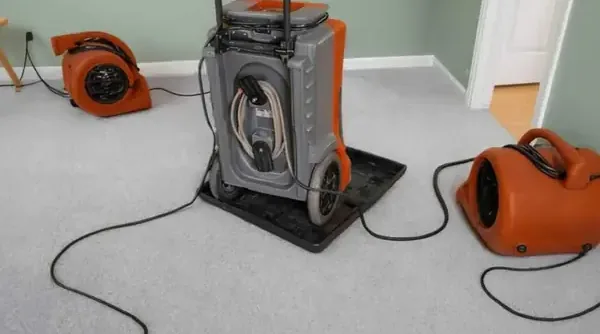
Concrete holds water and releases it slowly. The crew takes readings on the slab, the baseboards and the walls, then runs drying equipment until they match dry material.
That is the core of structural drying, and standing water on top of the slab comes out first through water extraction.
Questions to ask the plumber
The plumber's findings steer the whole repair, so it helps to ask clear questions and keep the answers in writing.
- Where exactly is the leak, and how was it located?
- Will the pipe be repaired in place or rerouted?
- Does the slab need to be broken, and where?
- Is the rest of the pipe under the slab in similar condition?
- When can the water be turned back on, and what stays off?
Why slab leaks often cost more than they look
A slab leak can run for weeks before it is found, so materials may be wetter than the surface shows.
Hidden water also reaches the base of interior walls and the cabinets above the slab. That is why readings at several heights matter before the repair is called finished.
Pulling baseboards and testing the lower wall shows whether water went further than the floor suggests.
- Check the base of walls and cabinets, not only the floor surface.
- Ask for final readings, not just a dry-looking floor.
- Keep the plumber's finding with the drying records.