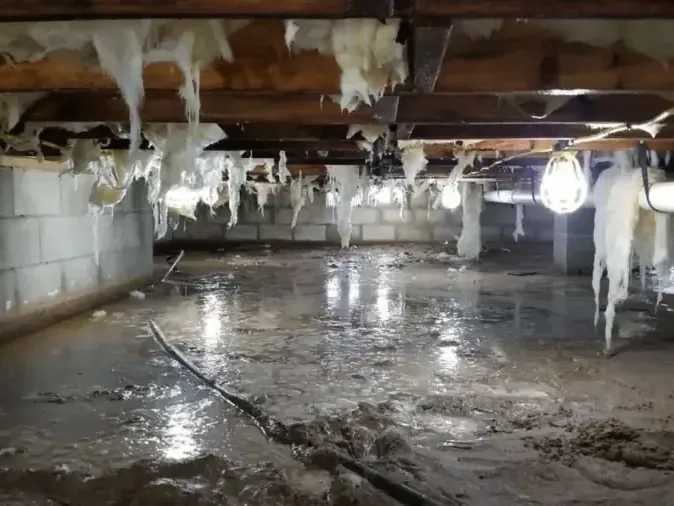
Spring and summer thunderstorms can drop heavy rain on Piedmont red clay, and red clay drains slowly. In Winder, where vented crawl spaces and slabs lead the housing mix, that rain often ends up under the floor instead of away from it.
Key takeaways
- Standing water, wet insulation or a sagging vapor barrier means the space needs extraction, not just airing out.
- Red clay drains slowly, so water can sit under a house for days after the rain stops.
- Find the source first: yard runoff, a leaking supply or drain pipe, or condensation on ducts and pipes.
- Never step into a wet crawl space with the power on or near wiring.
- Joists and subfloor need moisture readings before anything is closed up again.
Standing water or just damp air under the floor
A crawl space always smells a little earthy. Standing water is different, and it shows up plainly from the access door with a flashlight.
Most crawl spaces here are vented, so humid air moves through them all summer. Damp air leaves a film on surfaces, while standing water leaves puddles, shiny soil and dark patches on the wood.
A flashlight and a few seconds at the access door answer most of the question. If the beam shows water moving or a reflection on the ground, the space has a water problem and not just a humidity problem.
When water has pooled, crawl space water damage cleanup starts with extraction and moisture readings, not with fans.
- Puddles or a sheen of water on the soil or the vapor barrier.
- Insulation hanging from the subfloor or lying on the ground.
- Wood framing that looks dark or feels soft when pressed with a screwdriver.
- A tide mark on foundation walls or piers showing where the water stood.
- A low corner that stays wet long after the rain has stopped.
Why red clay sends rain under Winder houses
Piedmont red clay packs tight. When a downpour falls faster than the soil can take it in, the extra runs across the surface and collects wherever the ground is low.
A steep yard, a short downspout or a flowerbed that slopes toward the house turns that runoff toward the foundation.
Runoff and grade
Water follows the slope. If the ground rises against the foundation, the flow meets the vents and the wall and finds a way in.
Heavy rain also tests gutters. A clogged gutter spills down the wall instead of into the downspout, and that water goes straight to the base of the house.
- Downspouts that end right at the foundation wall.
- Soil or mulch piled above the vent openings.
- Low corners where two slopes meet.
- Yards that sit low beside a creek such as Marbury Creek, where the ground can stay wet for days.
Leaks and condensation
Not every wet crawl space comes from the sky. A weeping supply pipe, a failed drain joint or a leaking water heater can put water on the soil with no rain at all.
Long humid summers add a third source. Warm air meets cool ducts and pipes, and the condensation drips onto the insulation and the ground below.
What to shut off and check first
Safety comes before cleanup. A crawl space is tight and wet, with wiring and often ductwork running through it.
If the water is deep, if wiring is wet or if the source is unclear, stay out and let the response team assess the space.
- Power: switch off breakers for any outlets or lights in the crawl space before anyone goes in.
- Water: close the main valve if a pipe is the likely source, then see whether the meter keeps moving.
- Heating and cooling: turn the system off if the air handler or ducts sit in the wet area.
- Photos: take wide and close shots of the water, the insulation and any stains before anything is moved.
- Fans: a box fan does not remove standing water and can push humid air up into the living space.
- Children and pets: keep both away from the access door until the space has been checked.
What the extraction crew removes first
Standing water comes out first. A pump or a small extractor lowers the water level, then the crew pulls the thin film that is left on the soil and the vapor barrier.
Water extraction in a crawl space is slow, low work, and the order of the steps matters.
When standing water has soaked into the soil, pumping alone does not finish the job. The crew keeps extracting until the surface stops shining and the readings begin to fall.
Water, insulation and vapor barrier
- Wet batt insulation that has dropped is usually removed and bagged.
- The vapor barrier is lifted, cleaned and either dried or replaced.
- Debris that holds moisture against the soil is cleared out.
Readings on the wood
Moisture readings on joists, beams and the subfloor show how far the water traveled. Those numbers set the drying plan and decide what stays.
Drying the framing before anything is closed up
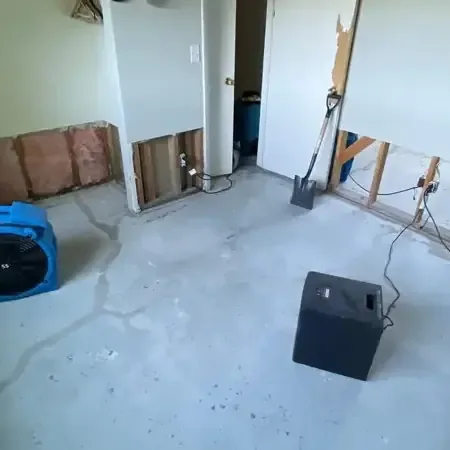
Once the water is out, the wood still holds moisture. Drying equipment sized to the space goes in, and the readings are logged until the framing is back to a normal level.
In humid weather the air itself is wet, so dehumidifiers matter as much as air movers. Drying a closed space in a Georgia summer takes longer than the same job in a dry spell.
Skipping that step is how a floor ends up cupped and a musty smell lingers. A short check with the crawl space moisture check shows what the space needs while it is still open.
- Joists and subfloor stay exposed until the readings are normal.
- Hardwood or laminate above the space is checked for cupping.
- Damaged insulation is replaced only after the framing is dry.
- Vents and the access door stay clear so air can move.
Keeping the next downpour out
The next storm finds the same path unless the path changes. A few site fixes cost little compared with a second cleanup.
When the framing has been dried and the floor above is sound, structural drying is complete and the fixes below keep it that way.
- Extend downspouts well away from the foundation.
- Regrade soil so that it slopes away from the house.
- Keep vents and the crawl space floor clear of leaves and loose soil.
- Ask a plumber to check supply and drain pipes under the floor.
- Ask about a drain or sump pump if water keeps coming back.