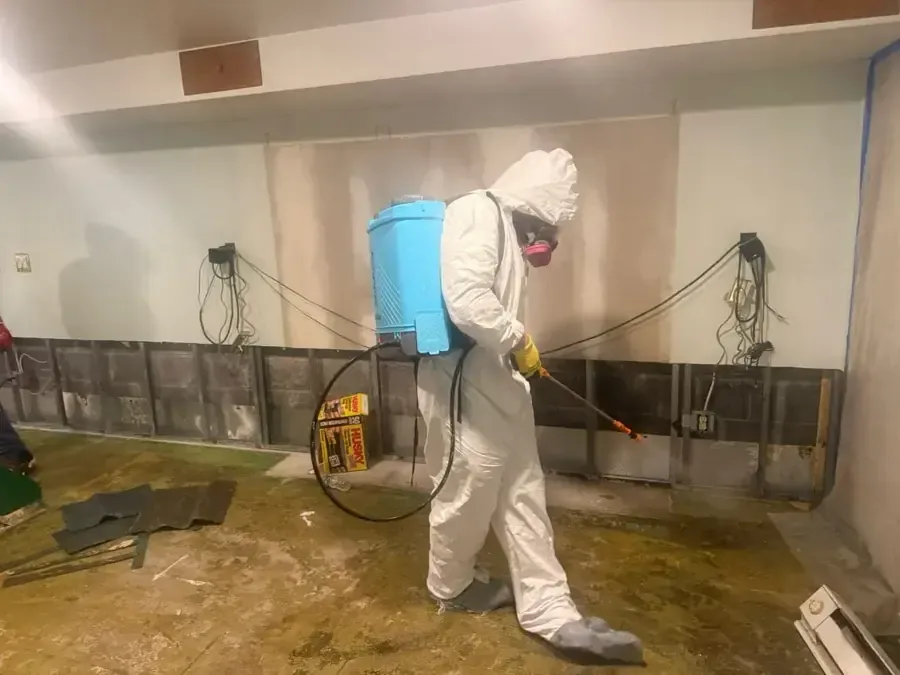
In Dacula, water and sewer service come from the Gwinnett County Department of Water Resources, not from the City of Dacula. When sewage comes up through a drain, the first question is which part of the system belongs to the owner.
Key takeaways
- The private sewer lateral runs from the home to the edge of the right-of-way, and the owner maintains all of it, including the connection to the public sewer.
- A cleanout at the right-of-way is maintained by the county, while a second cleanout nearer the house belongs to the homeowner.
- Georgia plumbing code requires a sanitary backwater valve when the lowest fixture is below the next upstream manhole, and the owner maintains it.
- Wet weather can cut sewer pipe capacity, so backups often follow heavy rain.
- Sewage in a house always needs professional cleanup, whatever the cause.
Where the owner's pipe ends and the county's begins
Between the house and the public sewer runs a private pipe called the lateral. Gwinnett County puts the edge of the owner's responsibility at the right-of-way, but the owner maintains the whole lateral, including where it joins the public sewer.
The county also requires a cleanout at the right-of-way, which it maintains, and a second cleanout nearer the house, which belongs to the homeowner.
When a drain fails, those two access points show which side holds the problem. Sewage cleanup begins after the pipe is cleared. Local pages on water damage restoration in Dacula cover the other services.
- Owner: the lateral from the house to the right-of-way, its connection to the public sewer, the cleanout nearer the house and the backwater valve.
- County: the cleanout at the right-of-way and the public sewer main beyond it.
- Not the city: it handles sanitation, while water, sewer and stormwater belong to the county.
What a backwater valve does
A sanitary backwater valve lets waste flow out of the house but closes if sewage tries to flow back in. Georgia plumbing code requires one when the lowest plumbing fixture is below the next upstream manhole.
The homeowner maintains the valve. Gwinnett County states that it is not responsible for damage from a sewage backup in the main if a required valve is missing.
- Ask a plumber whether the house has a valve and whether it is required.
- Have the flap and the access cover checked so debris does not hold it open.
- Know which fixtures sit lowest, because that is where sewage comes up first.
How a cleanout works and why it helps
A cleanout is a capped pipe that gives a plumber direct access to the sewer pipe. The one nearer the house belongs to the owner, and the one at the right-of-way is the county's.
What the plumber looks for
A backup that shows at the right-of-way cleanout points toward the public main. A clear cleanout there points back toward the owner's lateral.
- Water standing or rising in the cleanout means the blockage is downstream of it.
- A dry cleanout means the blockage lies between that point and the house.
- A camera inspection shows roots, cracks or a sag in the lateral.
Why heavy rain brings sewer backups
Gwinnett runs its stormwater system separately from the sewer. Even so, rain that finds its way into sewer pipes, called inflow and infiltration, takes up room meant for household waste.
That cuts pipe capacity during wet weather, which is why a backup can follow a long soaking rain even when the pipes worked fine in dry weeks.
A backup that starts during a storm and clears afterward can point to the public system, while one that repeats in dry weather can point to the lateral.
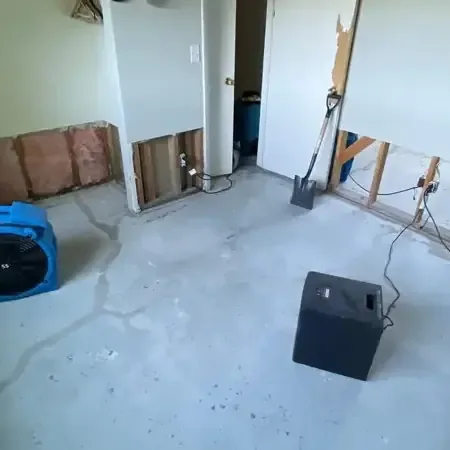
First steps when sewage comes up in the house
Treat any sewage as a health hazard. Keep people and pets out until the area is cleaned.
The full process is laid out under sewage and septic backup cleanup.
Sewage that comes up through a floor drain or a tub is rising from the lowest fixture, so keep that area closed off.
- Stop using water: no flushing, showers, dishwashers or washers.
- Switch off power to the wet area if water is near outlets.
- Wear gloves, boots and a mask, and avoid contact with skin and food.
- Photograph the affected rooms and the fixtures where sewage came up.
- Check the cleanouts or call a plumber to find which side holds the blockage.
- Arrange water extraction right away so the water does not soak further into floors and walls.
What sewage cleanup involves
Written notes from the plumber and photos from the first hours make later conversations easier.
Odors linger in porous materials, which is why removal matters more than air fresheners.
Ask the cleanup crew to list what was removed and why, so the rebuild matches the work that was done.
Removal
- Standing sewage is extracted and the area is isolated.
- Carpet, pad and wet insulation are removed and bagged.
- Drywall that wicked sewage is cut back to a clean edge.
Cleaning and drying
Hard surfaces and framing are cleaned and treated with antimicrobial products. Drying equipment then runs until the readings are normal, and rebuilding follows.
Questions to ask and records to keep
Written notes from the plumber and photos from the first hour make later conversations easier.
Questions for the plumber and the county
- Is the blockage in the owner's lateral or in the public main?
- Which cleanout showed the problem?
- Does the house have a backwater valve, and is it working?
- Is the lowest fixture below the next upstream manhole?
- Should the Gwinnett County Department of Water Resources be told about a problem in the main?
Records worth keeping
Records help when several parties are involved: the plumber, the county and the cleanup crew. A few minutes of note-taking saves a lot of back and forth.
- Photos of each affected room before cleanup starts.
- The plumber's written finding: where the blockage was and what was done.
- The dates of the backup and of any heavy rain before it.
- A note on whether a backwater valve was present.